> Development > Commerce


Krishna Deka from Nalbari has been associated with the plant and flower business for 35 years. Unlike many sellers who completely depend on outside suppliers, Krishna has developed his own nursery where he produces plants himself.
His nursery is spread across around 2.5 katha of land, approximately 7,200 square feet. Along with his own cultivation, he also brings plants from places like Pune and Kolkata to meet customer demands. His flower business supports his family, including his wife, three sons, and his brother, who helps him manage the shop.
Krishna has also expanded his work beyond selling plants. He provides gardening services, beautification work, and plant decoration. His knowledge of plant cultivation comes from training he received in Kolkata about agriculture, cultivation, and beautification work around 22 years ago.
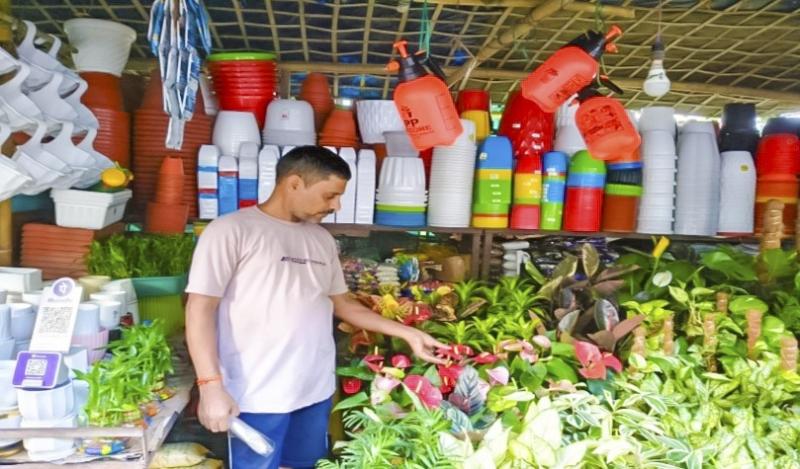
Photo : Vendors spend hours maintaining plants and managing their shops every day
However, maintaining a flower business comes with uncertainty. According to Krishna, plant damage is one of the biggest challenges faced by vendors. Since flowers and plants require continuous care, any damage directly affects their earnings.
Krishna Deka says that the biggest difficulty in his early years was arranging finances to establish his business. Even today, he hopes for financial assistance and support from the government to expand his work.
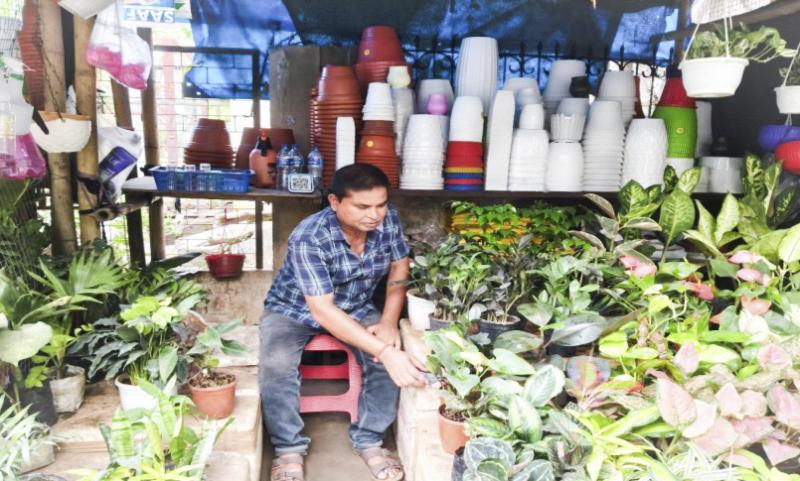
Kachari Plant and Flower Market in Panbazar, Guwahati, has been a familiar destination for plant lovers for decades.
Behind the colourful rows of flowers and plants at Kachari Flower Market lies a story of years of hard work, changing times, and survival. While customers visit the market to bring greenery into their homes, the vendors behind these plants continue a daily struggle to maintain a business that has supported their families for generations.
Located in Panbazar, Guwahati, Kachari Flower Market is considered one of the oldest flower markets in the city. According to the vendors, the market has existed for nearly five decades and has witnessed many changes in Guwahati’s urban landscape. From changes in customer movement to rising challenges in maintaining plants, the vendors have adapted themselves to survive with changing times.
For many sellers, this market is not just a place of trade but a workplace where they have spent a major part of their lives.
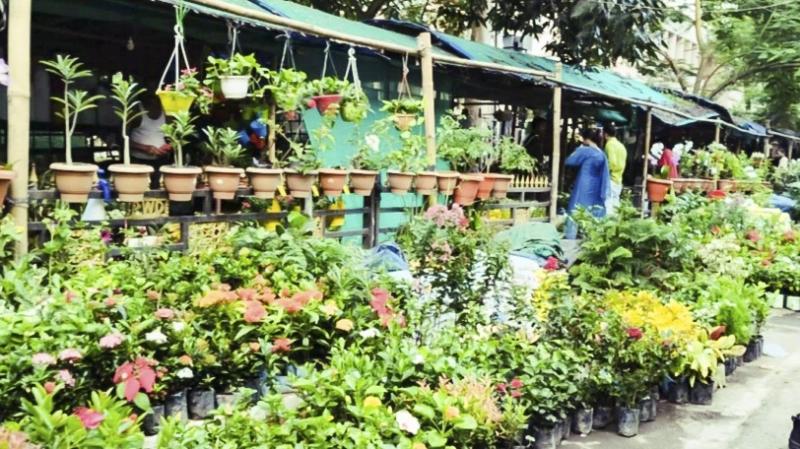
Photo : Vendors sell different varieties of plants along with materials required for gardening.
Apart from flowers and plants, the market also provides gardening materials for customers. One important part of their business is gardening soil, which is used for better plant growth. Vendors sell prepared soil mixtures containing materials such as vermicompost and DAP, which provide nutrients required for plants. However, the vendors are only retailers of these materials and do not produce the soil themselves. The availability of gardening materials makes the market a one-stop destination for people interested in maintaining home gardens.
The demand for flowers and plants changes according to seasons. Winter remains the busiest time for vendors, with flowers like marigold and dahlia receiving higher demand.
Permanent plants are comparatively more expensive because they require longer maintenance and care. During winter, vendors estimate that their average income can reach around Rs. 6,000, while during summer it may reduce to around ?3,000. Seasonal changes, transportation costs, and plant damage all influence their earnings.
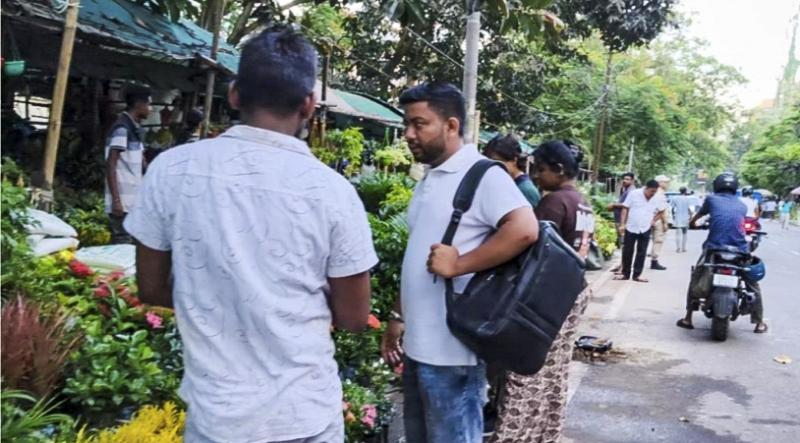
Photo: Customers, including students from nearby institutions, visit the market to purchase plants and flowers
The market’s customer flow has also changed over the years. Babul Deka, another vendor from Nalbari who has been running his shop for around 40–45 years, remembers a time when the market had more visitors. According to Babul, the presence of the district court and DC office near the market earlier brought more customers. After these offices shifted, the number of visitors decreased, affecting the sales of flower shops.
For vendors who travel long distances to work, daily expenses have become an additional burden. Babul explains that some vendors spend more than Rs. 200 on transportation for both ways, along with expenses for food during working hours.
“Many vendors are continuing their businesses not only for profit but also because it is the livelihood they have built over decades,” says Babul.
The challenges are not limited to sales. Since plants are delicate, damage during transportation and maintenance can lead to financial losses. Vendors also face difficulties due to limited facilities at the market. During summer, working in the heat becomes difficult as there is no proper electricity facility available for them.
Pankaj Talukdar, another vendor at the market, has witnessed the transformation of Kachari Flower Market over the years. He believes that development has taken place in terms of roads, production methods, and transportation facilities. However, he also points out that the shifting of important offices affected the regular flow of customers.
Pankaj says plants brought from different locations sometimes get damaged during transportation, causing losses for sellers. To raise their concerns and seek support, vendors have formed a committee.
Despite these difficulties, the vendors share a strong relationship with each other. Many sellers have worked together for years, creating unity within the market community. The vendors mainly belong to Assamese-speaking communities, creating a shared cultural connection among them.
The market also provides employment opportunities. Some vendors hire workers to help manage their shops, and these workers receive daily wages of around Rs. 700–Rs. 800. Every vendor contributes Rs. 50 daily for their shop area. They have also requested government support, including financial assistance and proper infrastructure.
According to the vendors, authorities had promised to develop a dedicated shop space for them, but the work has not started yet.
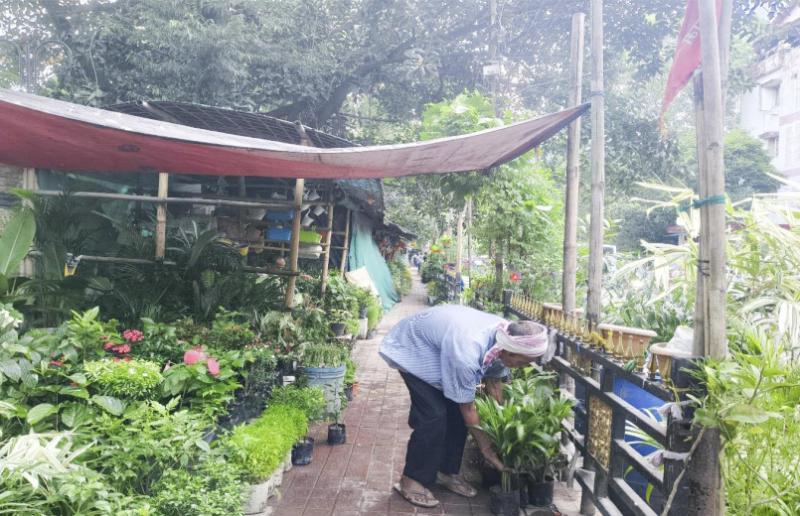
Photo: The vendors share a bond built through years of working together
Kachari Flower Market continues to survive through the dedication of people who have invested decades of their lives in this profession. The market’s flowers may attract customers, but the stories behind them reveal the struggles, hopes, and determination of the vendors who keep it alive.
As Guwahati grows and changes, these sellers hope that their decades-old marketplace will also receive the support and recognition needed for its future. Because behind every plant sold at Kachari Flower Market is not just a flower — it is the effort of a person who has spent years.
 Navigations
  Quick Contact
 Subscribe Us
 Quick Mail