> Development > Rural enterprises and Conservation


Along the lush, fertile banks of the Kohora River Basin, where the morning mist drifts gently across bamboo groves and the echoes of wild elephants resonate from the depths of Kaziranga National Park, a quiet revolution is taking shape. For decades, the forest-fringe villages of this UNESCO World Heritage landscape have existed in a delicate balancing act between wilderness and settlement.
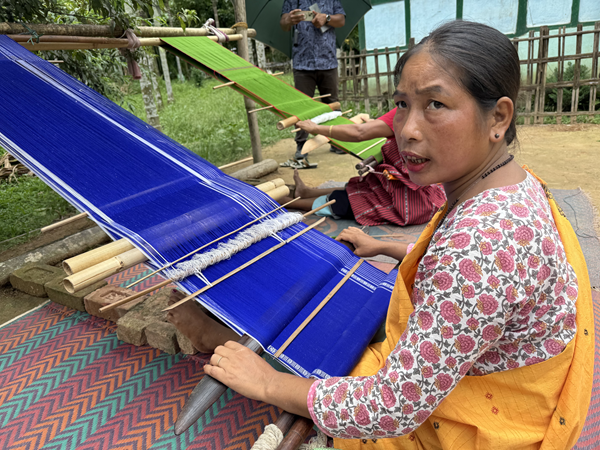
Photo- Sarim Tisso
Today, however, these same villages are becoming living laboratories of rural innovation, where women and students are integrating conservation into commercial and educational initiatives. Through community-led initiatives, Karbi women living at Kaziranga-Edge are blending ancestral knowledge, ecological stewardship, and modern market strategies to create a new model of sustainable development.
At the heart of this transformation lies Pirbi, a Biodiversity Business Management Committee that has evolved into a vibrant community enterprise. Established to strengthen the livelihoods of forest-fringe communities, Pirbi bridges traditional craftsmanship with contemporary branding and fair-trade market practices. What began as a small effort to revive weaving and biodiversity-based livelihoods has now grown into a movement of resilience and economic self-reliance.
As of 2025, Pirbi works with 200 women across ten forest-edge villages—Engle Pathar, Phumen Engti, Hemai Lekthe, Chandrasing Rongpi, Bakring Engti, Sivoram Terang, Sarbura Singnar, Diring Lekthe, and Sam Engti Rongtara. Most of these women once depended on seasonal labour, small-scale farming, or poorly compensated weaving orders from local traders. Today, they have become producers of high-quality handwoven textiles and nature-based products that travel far beyond their villages.

Photo: Sarim Tisso
“Earlier, I sold pini—the traditional lower garment worn by Karbi women—for only Rs. 500 to traders,” says Preety Tokbipi, 37, from Phumen Engti Village, recalling the undervaluation of their craft. “We had no knowledge of pricing or market demand. The middlemen controlled everything.”
Before Pirbi’s intervention, the trade was dominated by intermediaries who paid far below subsistence rates. Women worked long hours, only to earn meagre amounts that barely supported their households. Today, through fair-trade pricing, collective marketing, improved quality control, and direct access to buyers, these women earn Rs. 1,200–1,400 per garment—almost triple their earlier income. Their textiles, herbal teas, and other handmade products now reach eco-conscious consumers not only across India but also in Europe and the United States.
“Each sale sustains both a livelihood and a landscape,” explains Moromi Nath, Project Officer at Aaranyak, the biodiversity convservation organisation supporting Pirbi. “When communities benefit from forests, they naturally become their guardians.”
However, the journey is not free of obstacles. The monsoon season creates logistical challenges, limiting the movement of goods to markets. The rise of low-cost factory-made products threatens the uniqueness of handmade crafts. Additionally, several young mothers who join training sessions struggle to continue due to household responsibilities. Yet, despite these hurdles, determination remains strong, and the momentum continues to grow.
Pirbi’s spirit of entrepreneurship extends beyond weaving and forest-based products; it has also transformed the tourism landscape of Kohora. As Kaziranga welcomes travelers from across the world, women-led eco-homestays situated around the park’s periphery are offering visitors an intimate glimpse into rural Karbi life.
Since 2022, 16 eco-homestays have been established, all managed by women. Guests staying here wake to the sound of birdsong, participate in traditional cooking, learn about indigenous farming methods, and immerse themselves in the rhythms of village life. These experiences embody the idea that tourism is not just a business—it is a living expression of heritage.
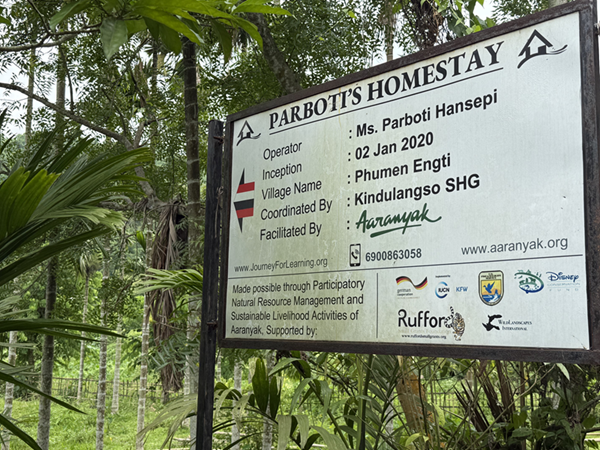
Photo: Sarim Tisso
In 2024 alone, these homestays welcomed 111 visitors, generating around Rs. 23 lakh in total revenue under the management of Self-Help Groups. Today, 9 homestays are actively functioning across four villages, offering an important supplementary income for rural families.
“Tourists come for the forest, but they stay for our stories,” smiles 38-year-old Preety Tokbipi, who also hosts guests in her home. “Their appreciation reminds us that our culture has value.”
The Kohora homestay model has caught the attention of Assam’s tourism officials, who recognise it as a leading example of community-based tourism. Still, challenges linger—licensing procedures, infrastructure gaps, and road connectivity issues limit the sector’s full potential. Even so, the confidence among women entrepreneurs is growing, and the homestays continue to inspire surrounding villages to consider similar ventures.
While women energize the economic landscape, the next generation is receiving an ecological education through Amar Bagisha—meaning “Our Garden.” This eco-education initiative aims to build environmental consciousness among schoolchildren living around the national park.
Implemented in two schools—Diring LP School (Classes 1–5) and Chandrasing Rongpi Memorial School (Classes 7–8)—Amar Bagisha engages more than 60 children in organic gardening, hands-on ecology lessons, and biodiversity learning. What started in 2022 as simple kitchen gardens has now grown into vibrant learning spaces where children cultivate vegetables, observe local species, and learn the principles of conservation.
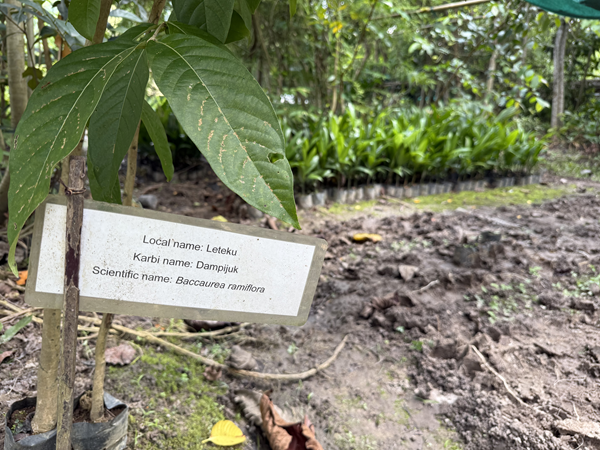
Photo: Sarim Tisso
“We want students to see ecology as something alive and connected to them,” says Krishna Upadhyay, headmaster of Chandrasing Rongpi Memorial School. “When they care for plants, they learn to care for themselves, their community, and their environment.”
These school gardens not only provide fresh produce but also instill a sense of responsibility and belonging to the land. For children living on the edges of a globally renowned wildlife sanctuary, Amar Bagisha nurtures a generation that understands the value of coexistence—protecting nature while living harmoniously with it.
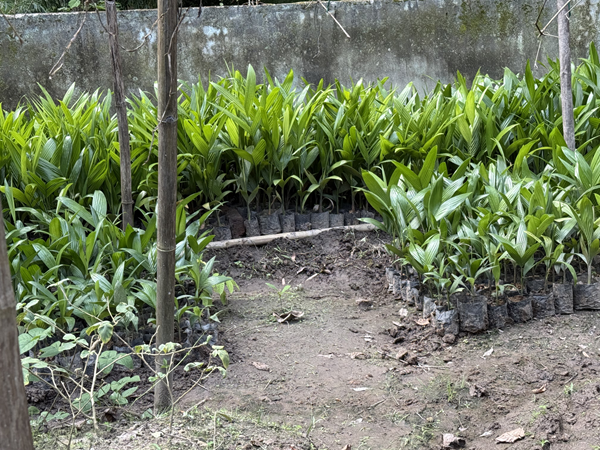
Photo: Sarim Tisso
From weaving looms to homestays, from school gardens to global markets, the forest-fringe communities of Kaziranga are crafting a new narrative—one where conservation and commerce complement each other. Through the leadership of women and the curiosity of children, these villages are proving that sustainable development is not an external intervention but a homegrown movement rooted in identity, resilience, and hope.
 Navigations
  Quick Contact
 Subscribe Us
 Quick Mail