> Development > Livelihood


Matu Bora (46) has been shaping clay into traditional pottery since she was ten. The woman artisan, a resident of Salmora, a village in the world famous Majuli river island, also endured five-time displacement due to erosion since her childhood. A spur, constructed to stabilise an embankment of the river island is the present address of the artisan family. Despite the multiple displacement, her grip on the centuries-old craft work remains strong and her resolve to carry on remains unbroken, like the clay she moulds each day with her hands.
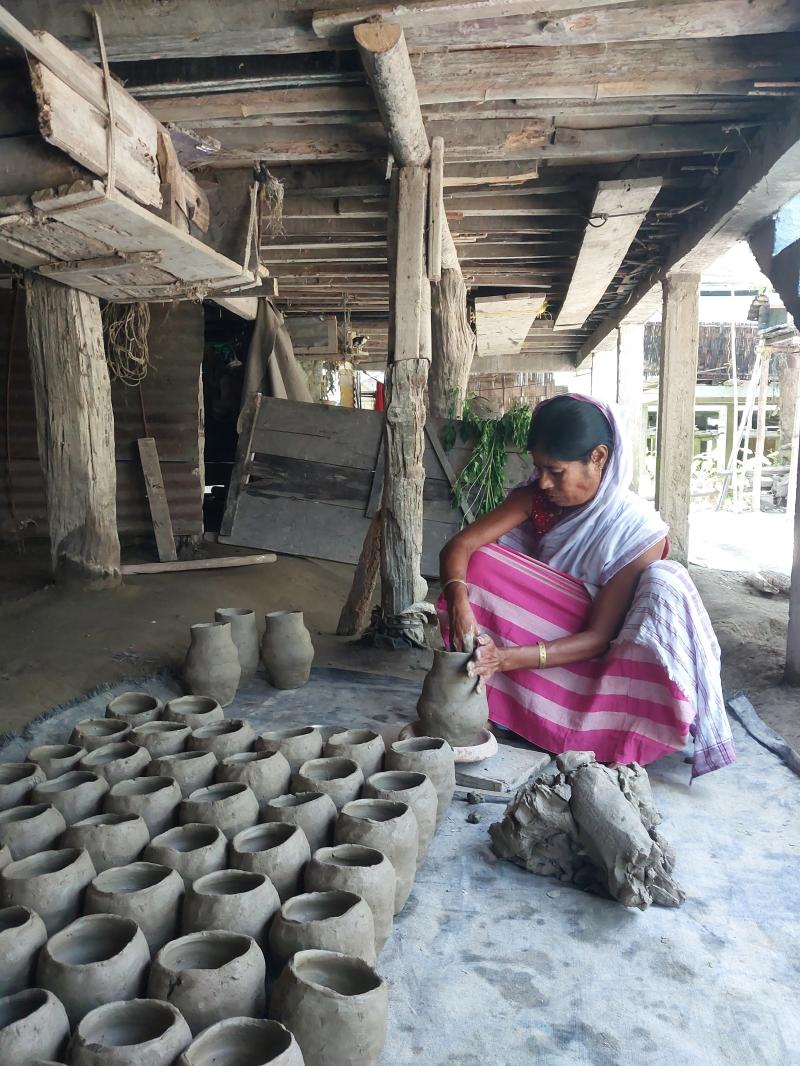
The village, famous for centuries-old tradition of pottery making, stands defenceless against annual flood and erosion caused by the mighty river as it is located outside the embankment.
“Our parents were not educated enough, and they tried to feed us by making earthen pots. To help them, I also got involved in the earthen pot making craft during my childhood. Since then, I have been engaged in this craft. This is our only source of income," she says.
Both Matu Bora and her husband have been engaged in pottery making craft, the main livelihood option of the family. Their elder son is studying at undergraduate level, while the younger one is a higher secondary student. For the past 15 years they have been living on the spur. They have built their dwelling house on a raised platform, to remain protected from submergence during annual floods.
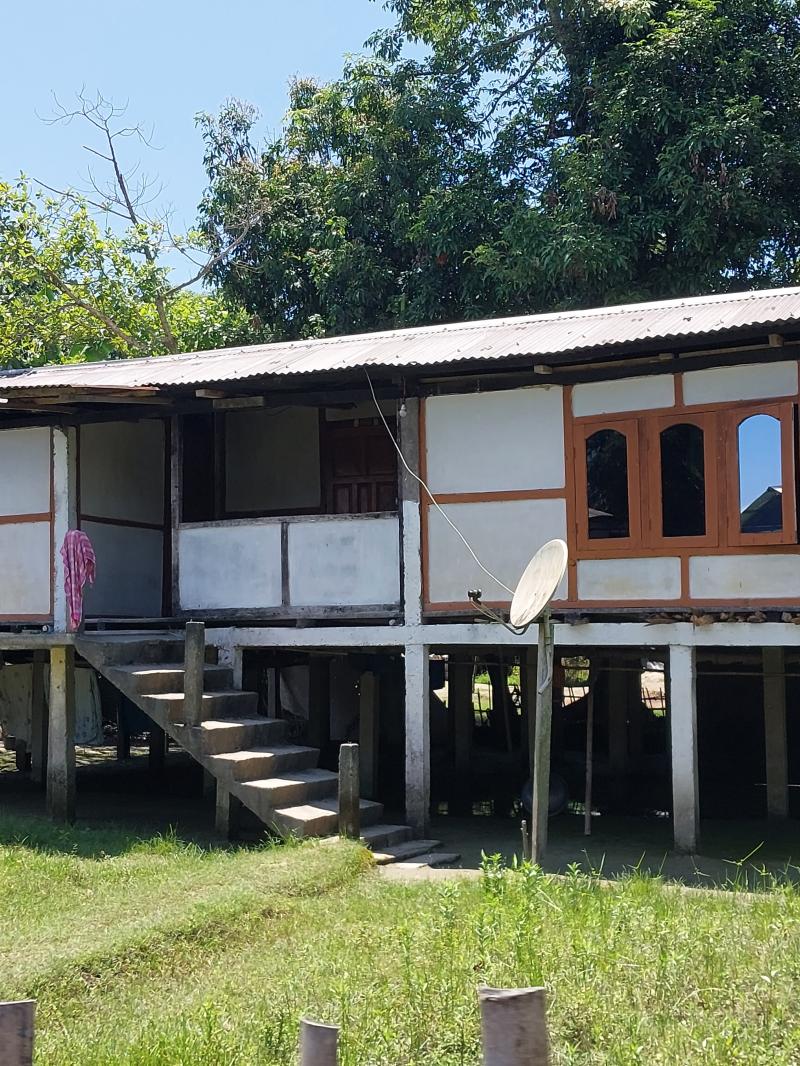
Their life and struggle are no more different from hundreds of artisan families in the village, who survive on pottery making. Uncertainty continues to grip both lives of artisan families and the rich cultural heritage of the village they have preserved for generations. However, the bridge under construction to connect the river island with Jorhat on the south bank of the Brahmaputra, and experiments adopting modern technology has brought them new hopes.
The Salmora village, located in the extreme south-eastern corner of Majuli, is 25 km off Garmur, the district headquarters of the only island district in India. According to the villagers, the pottery making tradition of Salmora village has a history of over six hundred years. They say that this art form took shape during the time of 15th century Vaishnavite Saint Srimanta Sankardev. The art form, which is mainly practised by the Kumar community of the village, carries a signature landmark of the river island.
"The Khol, one of the main percussion instruments used in musical performances of Vaishnavite culture, introduced by Mahapurush Sankardev was made by artisans belonging to the Kumar community of Salmora with clay. They also made the Doba ( A large traditional Assamese drum played in Namghar-the prayer hall of an Assamese village) used in the Barpeta Satra(Vaishnavite monastery) at the time of the establishment of the Satra. It was during the Ahom Rule that the pottery trade started and gradually flourished in Salmora village," says Bikash Hazarika, an artisan of the village sharing the rich oral history of Salmora.
Biju Hazarika, another woman artisan says, "Over 580 families live in this village, which is considered as one of the largest villages of Assam. It has a population of over 3,000. Most families are engaged in pottery making craft. ”
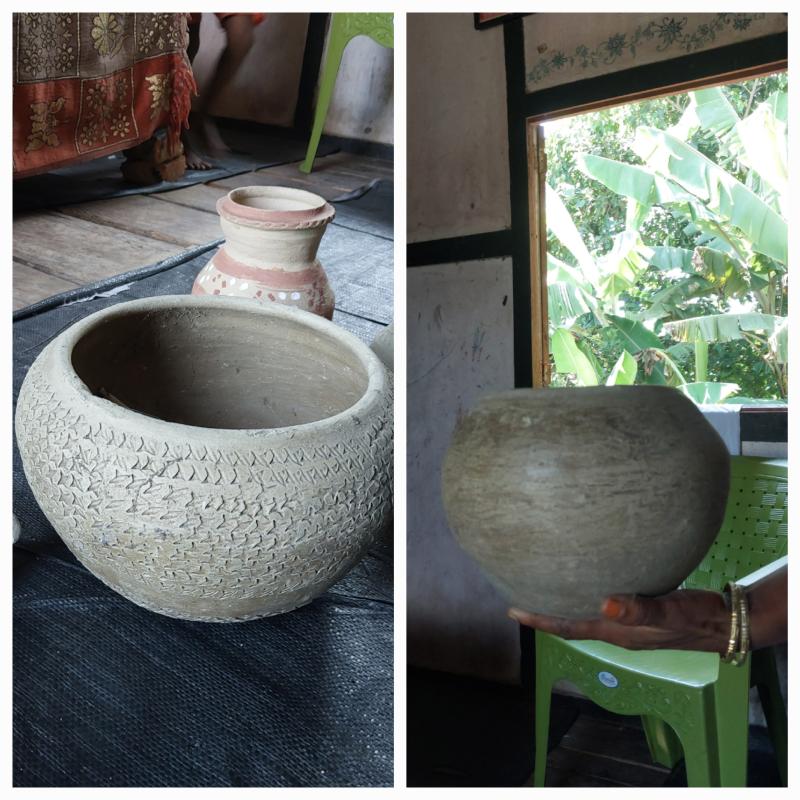
These earthen pots they make including mola, tekeli, Kalah, dunori, sarai etc. among others, are mainly used for day-to-day household purposes. These products have a steady market inside the river island, as well as outside.
Jagat Hazarika, a master artisan of the village, who has been closely associated with this art form his childhood days, explains the technical parts of the traditional pottery of Majuli thus: "The artisans used to dig the bed of the river like a well to get sticky soil suitable for making clay pots by mixing it with sand. This soil is shaped into different pots by hand and left to dry in the sun. During the months of Kati and Aghon of the Assamese calendar year(Mid-October- to mid-December), they are made suitable for burning in 'Poghali', or the giant kiln."
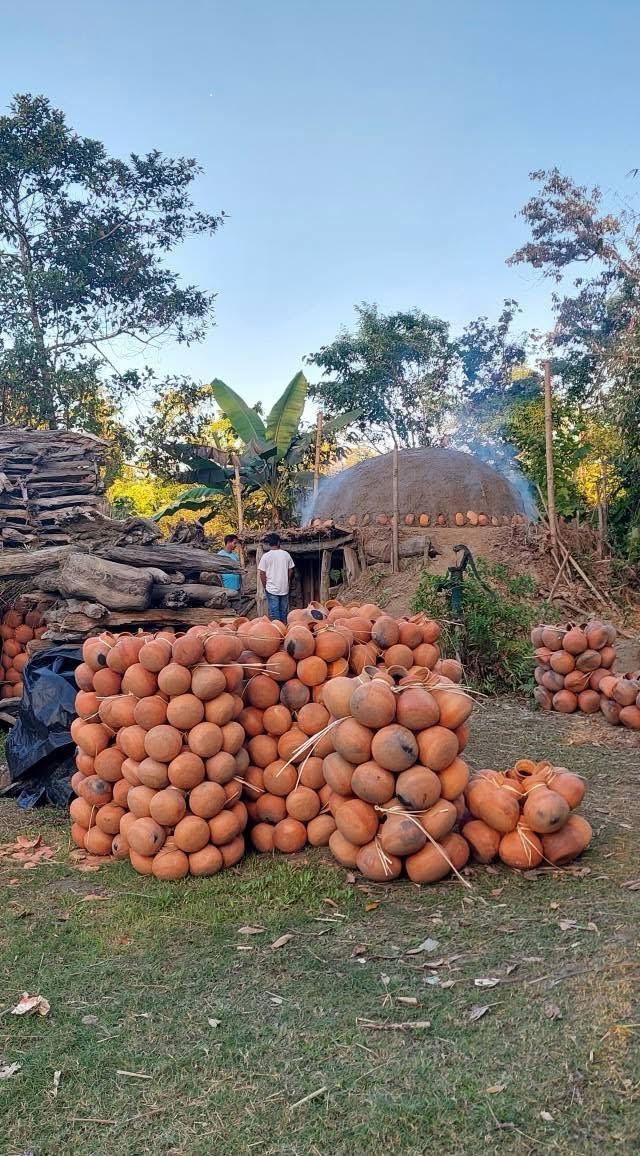
However, now it is not possible to collect soil from the river bed. "Currently the government has banned digging of the river bed. This has now led us to use the soil that comes out while digging ponds of people's houses. Earlier the main raw material for making pottery was freely available, but now a truckload of soil costs up to Rs. 5000,” says Jagat Hazarika about new financial and economic challenges faced by the artisans.
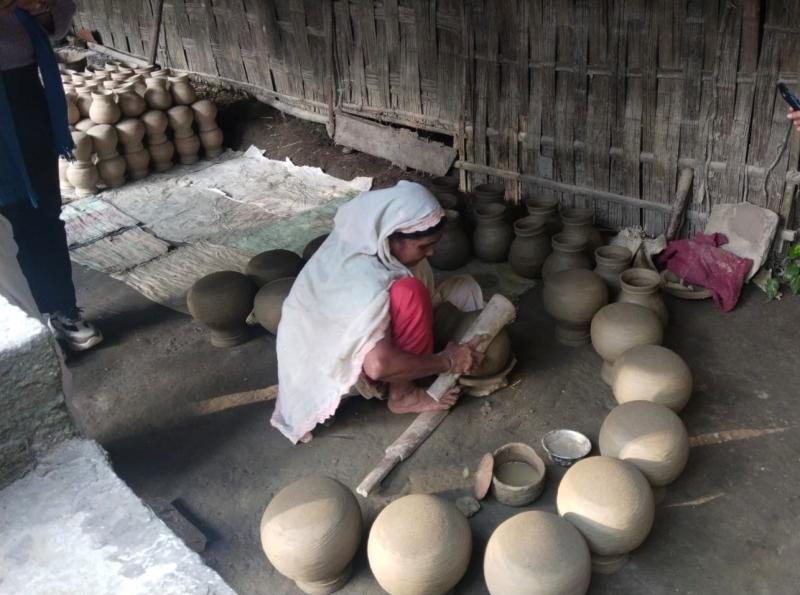
Women play a crucial role in the pottery tradition of Salmara village. They devote a significant time taken out from daily household chores to make the earthen pots. Although women are actively involved in making the pots, it is always the men who do the marketing.
"From one truckload of soil we can make around 1,000 earthen pitchers. Price of each pitcher varies from Rs.20 to Rs.100 depending on the size of the pot. This is a good price and we can earn profits", says Matu Bora.
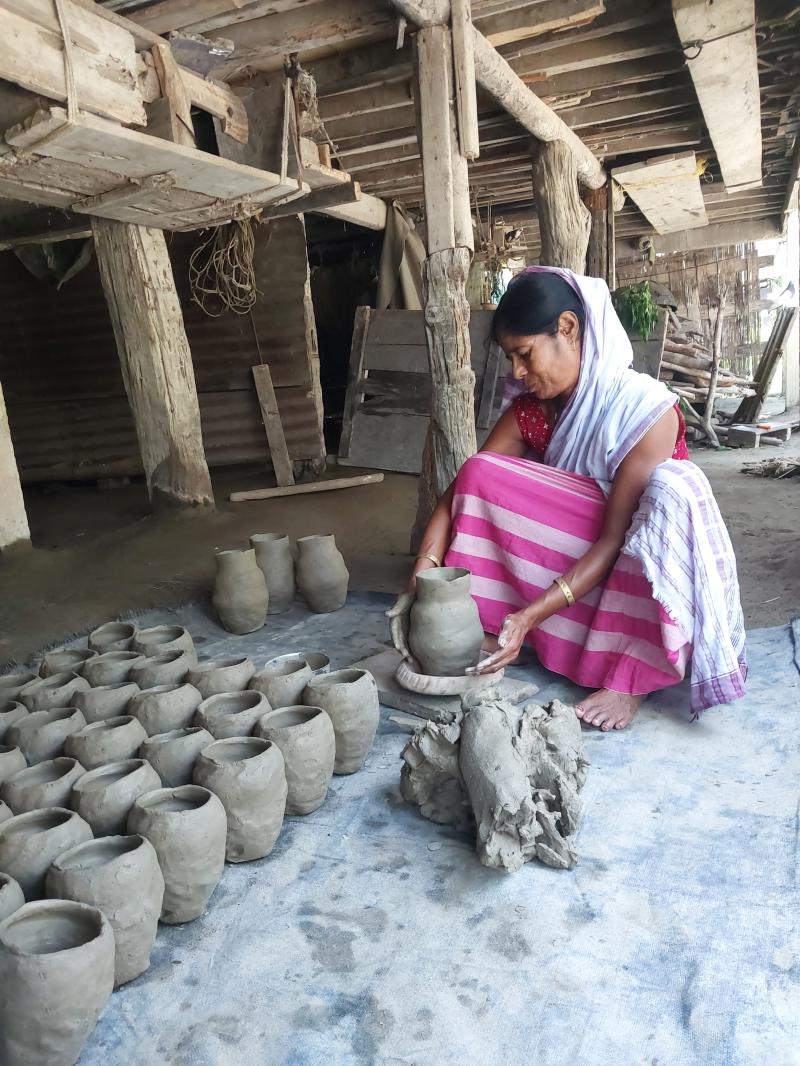
Traditionally, these containers are shaped by hand by kneading clay with a stick. Nowadays, some of the artisans use electric potter’s wheel to shape the pots. This has enabled them to make more products in relatively less time.
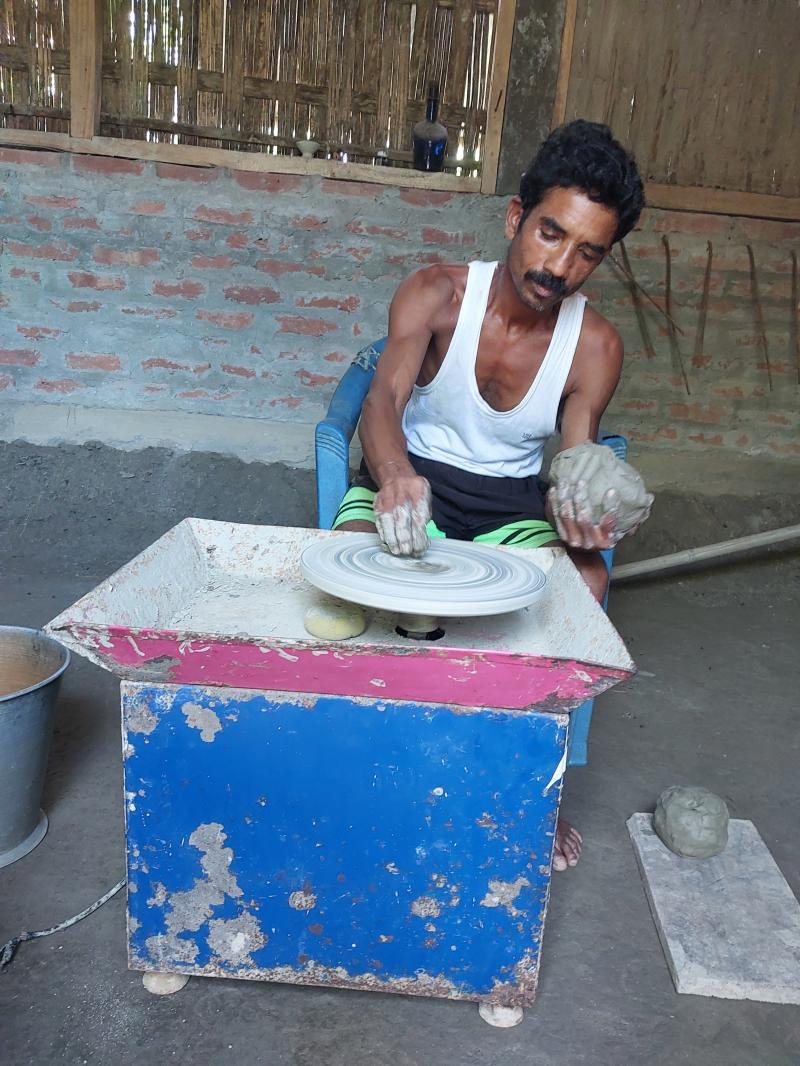
Bikas Hazarika, a skilled potter, makes varieties of earthen pots with the help of electric wheels. In 2002, he completed a Master Potter Course in Karnataka under the guidance of Khadi and Gramodyog Commission and now is invited to various parts of Assam and outside the state as a master trainer of terracotta.
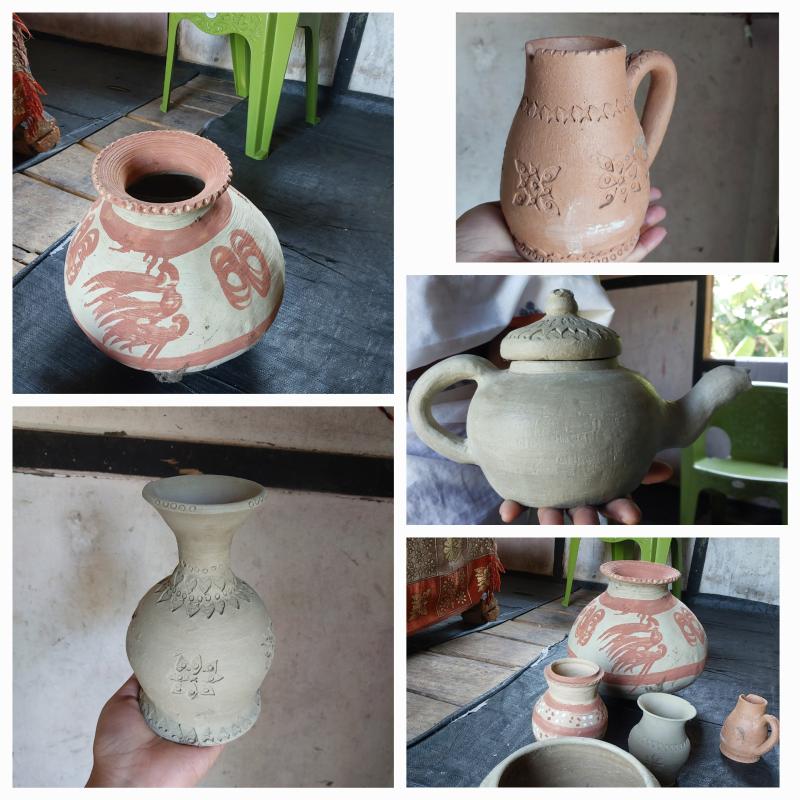
Hazarika was also instrumental in taking a group of ten women artisans of the village to Indira Gandhi Rastriya Manab Sangrahlay, Bhopal to participate in a 20-day long artists’ workshop on “Mati Ghar-Pottery Tradition of India” that started on December 10, 2016. For over 20 years, Bikash Hazarika has been making earthen pots using electric pottery wheels, and has benefited from increased productivity.
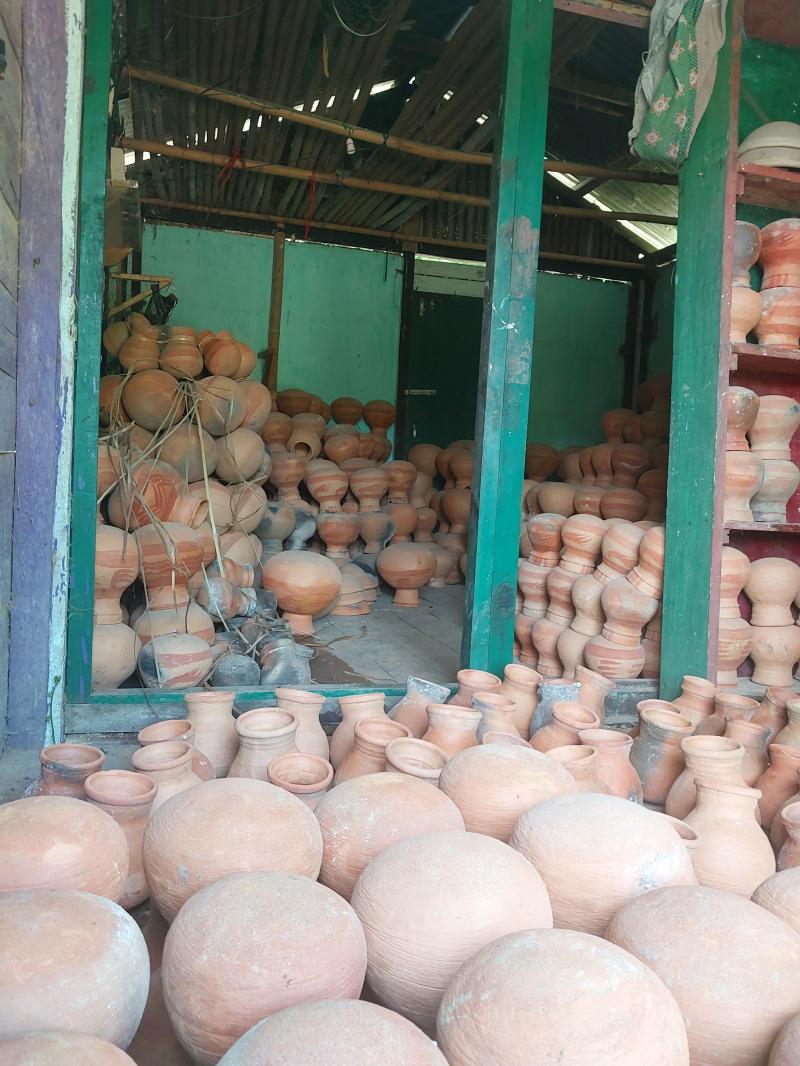
Most of the younger generations in the village are reluctant to take up pottery making as a livelihood. On the contrary, young people from other villages have shown keen interest to take up this work as a livelihood, the villagers say.
The potters of Salmora village along the river traditionally used to do business using the river route by boat. Explaining the pain of this experience, Jagat Hazarika says, "Earlier, it used to take about 10 days to transport the earthen pitchers from Majuli to Sivasagar by boat. In lieu of money, they used to barter the pitchers for paddy, rice, jaggery, etc. This barter system has not stopped yet,” he states.
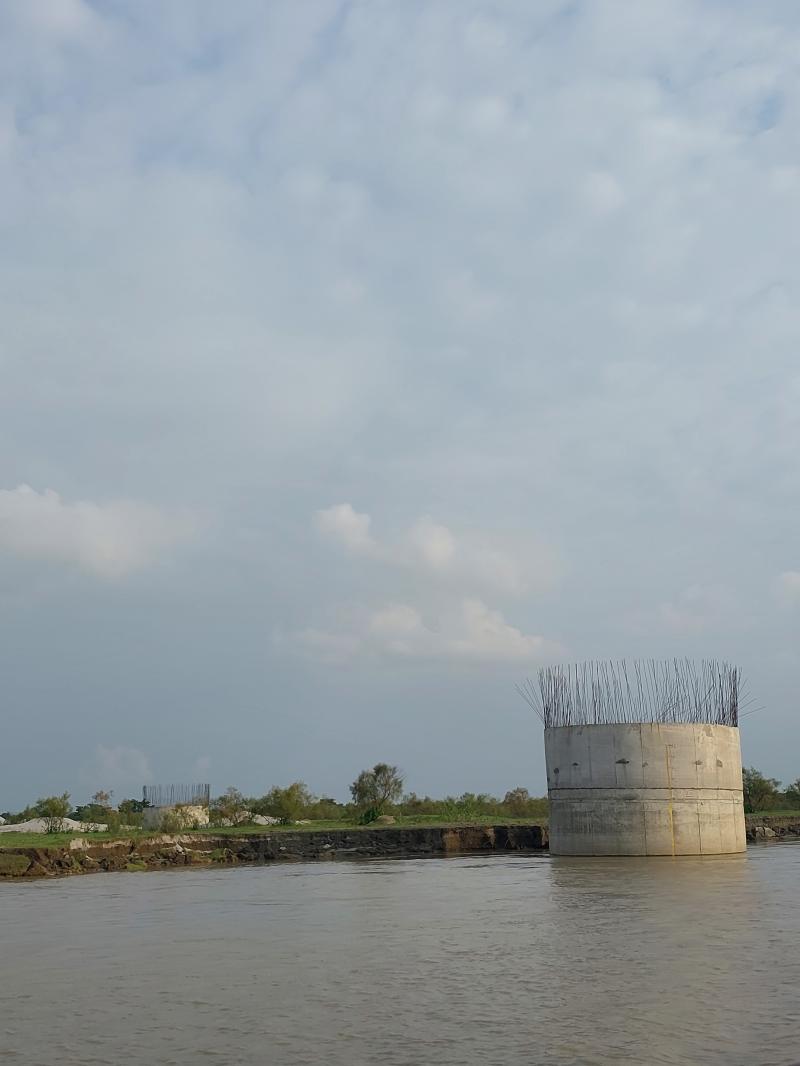
At present, however, they transport the pots in carriage vans from the Nimatighat, the ferry ghat on the southern bank of the Brahmaputra. The potters of Salmora are very enthusiastic about the ongoing construction of Majuli-Jorhat bridge. They say that the bridge connecting Majuli and Jorhat, will benefit the artisans’ families of Salmora by helping them to flourish in their business as they will be able to make and transport these earthen pots at reduced cost and in less time.
 Navigations
  Quick Contact
 Subscribe Us
 Quick Mail