> Society > Gender Rights


“First my daughter stopped eating well after marriage. Then she stopped smiling. We thought it was just a weakness. Only later, the doctor said she had severe anaemia. But who listens to women’s pain until it’s too late?” — says a mother from rural Assam.
Health is often described in hospitals and medical textbooks as the “absence of disease.” But for millions of Indian women, health is shaped not just by biology but by the invisible weight of society. A woman’s well-being is often less about her body and more about the roles, rules, and restrictions imposed upon it.
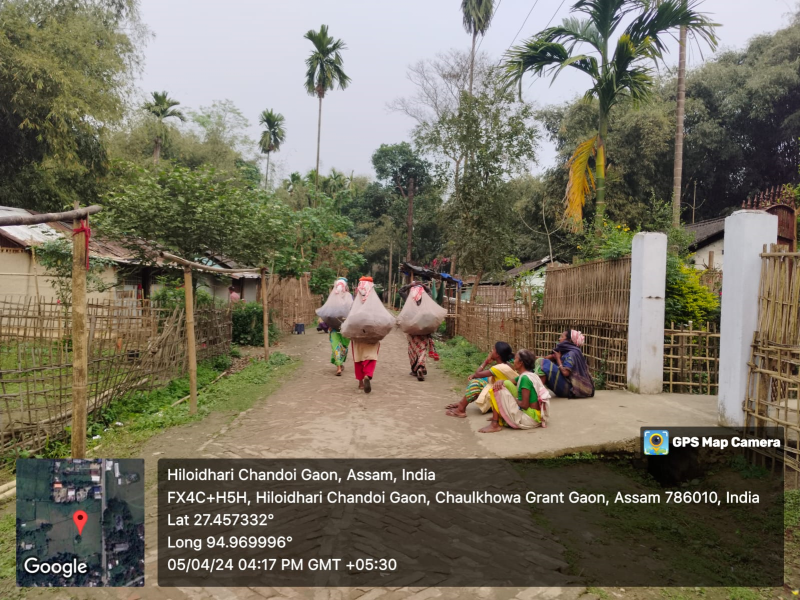
Across rural Assam, in tea gardens, villages, and towns, one finds a recurring truth: women’s health is not only medical, it is social. Poverty, patriarchy, and power imbalances often decide how quickly — or whether — a woman seeks care at all.
In many families, women eat last, after serving husbands and children. They delay their own medical visits until the illness becomes unbearable. Sociologists call this a function of structural functionalism — the idea that every institution has roles to maintain social order. In practice, this means women are expected to maintain the “health” of the family, often at the cost of their own.
Take the example of Jhilik, a 42-year-old agricultural worker from Chabua, Assam. She spends dawn to dusk in the fields, but when asked if she ever visits a doctor, she laughed: “Why would I waste money on myself? If my son coughs, we rush him to the clinic. But my pain… I can manage.”
This is not just personal sacrifice. It reflects an ingrained hierarchy: the family survives because women absorb the costs. In Guwahati, the story is different but eerily similar. Ritu Majhi, a 29 year old private tutor, takes care of child, household and classes. Despite recurring migraines, she avoids consulting a doctor: “I don’t want to spend Rs. 500 on a consultation when the money can buy my child’s books.”
Whether rural or urban, women’s pain is normalised as part of their role in maintaining family balance.
Conflict theory informs us that inequalities and power struggles influence health outcomes. This is a reality that is experienced by the women of India. In tea garden societies, women work between 8 and 10 hours a day, picking leaves in austere situations. Pregnant women usually work until the last weeks. A young mother, Malati, recalled: “The tea bushes don’t stop growing when we bleed. If I rest, we don’t eat.”
Wages are meager. Healthcare facilities are either underfunded or far away. Here, class exploitation intersects with gender: women workers, despite being the backbone of the industry, remain invisible in health policy conversations.
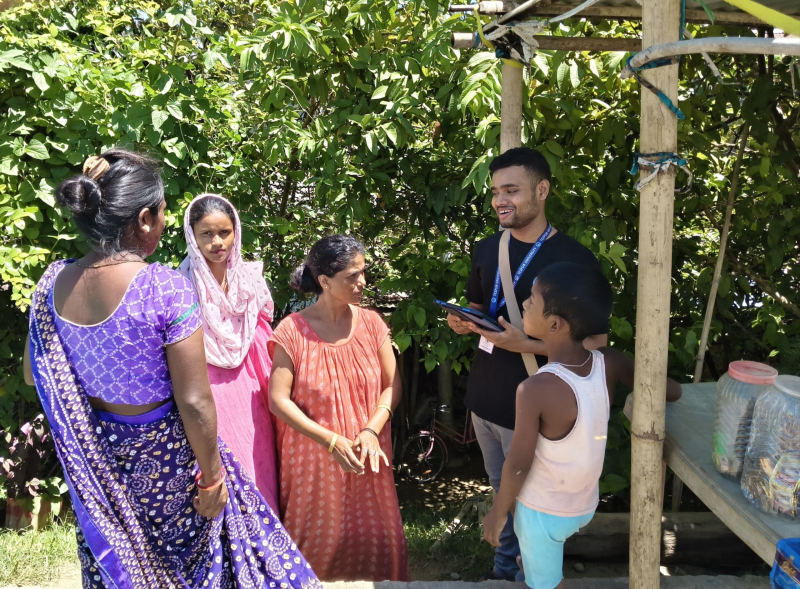
In contrast, middle-class urban women face a different battle: the stress of “double shifts.” Office hours are followed by unpaid domestic labor at home. “I wake up at 5 am, pack tiffins, go to the office, return and cook dinner,” said Shalini, a bank employee in Mumbai. “By 10 pm, I collapsed. Who has time for a check-up?”
Inequality doesn’t always mean lack of money. Sometimes it means lack of time, voice, and recognition.
Not all illnesses are spoken aloud. Menstruation, infertility, menopause, and mental health are wrapped in silence. Symbolic interactionism helps us see how stigma shapes behavior. For adolescents, the silence is especially damaging. A 14-year-old in rural Assam admitted: “I thought my stomach cramps were punishment from God. No one told me it was just periods.”
The taboo means girls skip school during menstruation, miss out on opportunities, and suffer in silence. In cities, the stigma takes subtler forms. One software engineer, Neha, recalled how her male co-workers turned her request to work flexible hours down because of period pain: They laughed and replied, Women make a mountain out of a molehill. “ I felt small and humiliated.”
The cultural script of shame is perpetuated even when women are educated and financially independent.
The feminist approach makes us face the unpleasant facts: the health of women is under a systematic attack by patriarchy. Medical research has neglected to include women in trials for decades, designating male bodies as the universal standard. Even today, doctors are more likely to dismiss women’s symptoms as “psychological.” In villages, women are fed less protein and vegetables than men.
In another scenario Shahida, a 23-year-old newly married woman. Her in-laws control her diet, ensuring she eats after the men. When asked about her weight loss, she shrugged: “It’s normal. A daughter-in-law must adjust.”
But resistance exists. In a women’s collective in Guwahati, activists campaign for menstrual hygiene products in schools and anganwadis. One activist said: “We don’t need sympathy. We need systems that recognize us as humans first, women second.”
This re-writing of the health narrative — from sacrifice to rights — is the heart of feminist health advocacy.
Lack of consideration to women and their health has consequences. An anaemic mother will not be able to breastfeed and this will undermine the future generation. Early-married girls can have reproductive problems. A sick woman who has arthritis is unable to carry out any duties around the house, which heightens dependency.
The result? Cycles of poverty and malnutrition. As economist H.K. Nandeesha warned, poor women’s health is not just an individual tragedy but a national economic burden. Consider migration. Women in the construction sites of Delhi work throughout the day with bricks. In the absence of adequate rest or maternity provisions, many miscarry. But no one sees their pain since they are expendable labor. In these cases, health is a luxury - the first consideration is to survive.
What these stories have in common, then, is not similarity but common invisibility:
1. The wives of rural farmers accept chronic pain as a destiny.
2. Burnout among urban workers is disguised as efficiency.
3. Teenage girls equate biology to sin.
4. Old women struggle with arthritis and loneliness, but it is seen as a sign of old age
weakness.
5. Labor conditions to migrant workers cost them their unborn babies with no
payback.
The same thread different lives: the health of women is a sacrifice made on the altar of family, economy and culture.
The stories and statistics converge on one truth: women’s health is not a women’s issue — it is a
societal one. Five urgent steps emerge:
1. Affordable Access - Healthcare, reproductive services, and nutrition programs should be extended to rural and marginalized women.
2. Education & Awareness - Starting in schools to tea gardens, girls and boys should be taught that it is normal and not a cause of shame to menstruate, to have reproductive health, and to take care of themselves.
3. Policy and Protection - Laws need to ensure maternity leave, equal pay and health to women who work in any particular industry, particularly in the informal sector.
4. Community Dialogues - Men and elders should be a part of the discussion about female health so that they can break the taboos together.
5. Holistic Approach - Health programs should address not just diseases but nutrition, mental well-being, domestic violence, and reproductive rights.
Every woman’s body is more than a vessel for labour or reproduction. It is a living archive of care, sacrifice, and resilience. Yet too often, society treats it as expendable. To improve women’s health is not only to treat anemia, infections, or depression. It is to reimagine a society where a woman is allowed to say: “My pain matters. My health matters.”
Until then, millions of women will continue bleeding, bearing, and breaking in silence — while the world applauds their endurance instead of questioning their suffering.
Photo : Subhankar Dey
 Navigations
  Quick Contact
 Subscribe Us
 Quick Mail