> Photograph > Photo Story


Avdesh Rai and two other dairy traders quickly load their milk jars and curd pots when the ferry bound for Nimatighat in Jorhat briefly anchors at Lakhi Chapori. The ferry left Kamalabari ghat of the world-famous Majuli River Island around 10 am on a sultry July Saturday. Lakhi Chapori is a large sandbar of the Brahmaputra River along the Kamalabari-Nimatighat river route.
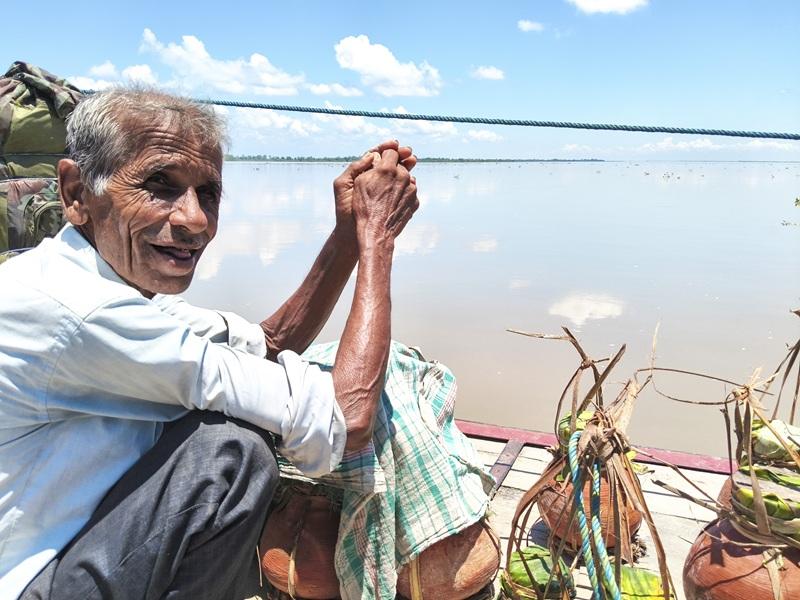
Photo: NEZINE
The chaporis or sandbars of Brahmaputra are ideal for dairy farming and sustain large livestock population reared by dairy farmers of the river island. Majuli has 33 Chaporis with a sizeable number of cattle pens on those sustaining large population of milch animals.
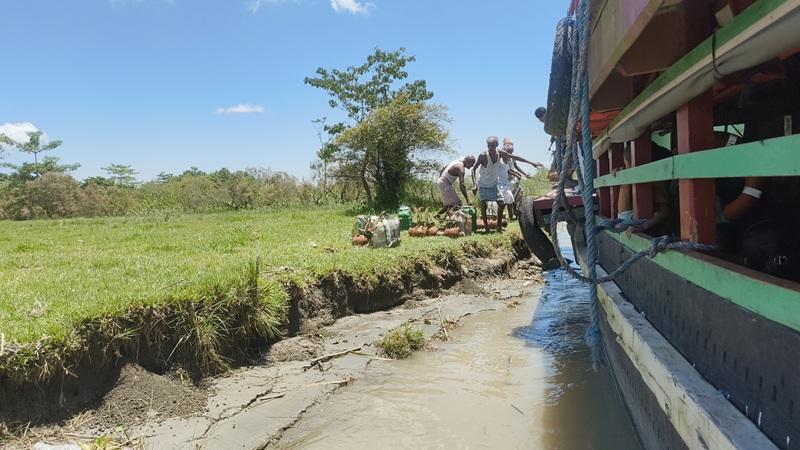
Photo: NEZINE
For Rai, now in his early sixties, collecting milk and curd from cattle pen, popularly called khuti in Assamese, in Lakhi Chapori and supplying those to customers in Jorhat across the river is a daily routine for his livelihood. His daily income reduces drastically when grazing yard of the chapori remains flooded and there is shortage of green fodder for cows and buffalos of the cattle pens owned by dairy farmers belonging to Assamese and Mising communities of Majuli.
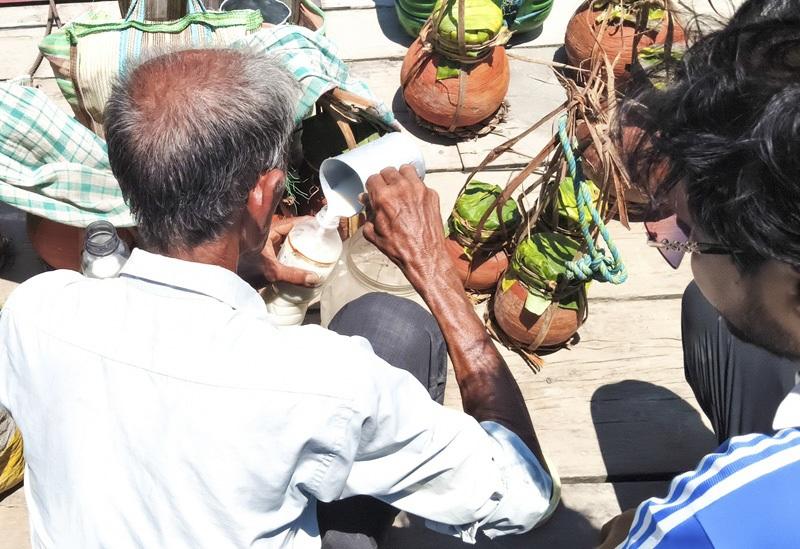
Photo: NEZINE
“I had plans to continue my education after my matric ( high school leaving) examination in 1980. As my father, who was the bread winner of our family as a milk trader of Lakhi Chapori, passed in the same year, I had no other option but to come here to continue his dairy trade to sustain the family,” he says while briefly narrating his 46 year-long-journey as a dairy trader of a Majuli sandbar to NEZINE. As the ferry pushed through strong current of the flooded Brahmaputra to its upstream destination, the wind and the roar of the ferry engine made him lift his voice to remain audible.
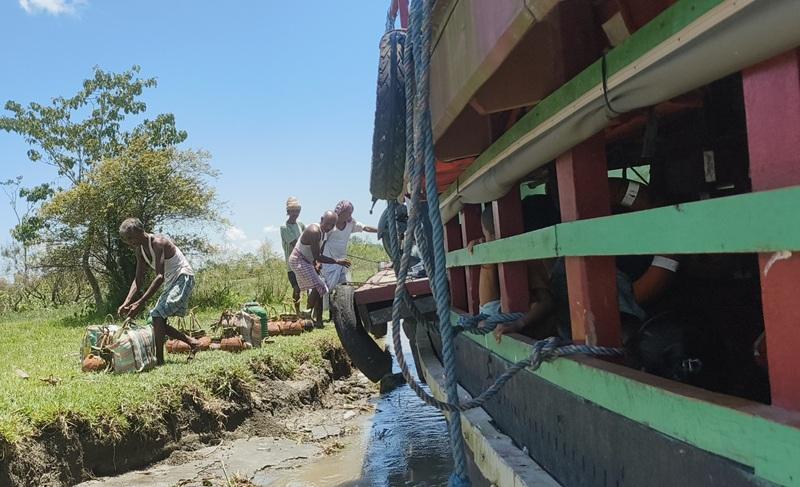
Photo: NEZINE
The elderly trader, who hails from Bihar’s Chapra district, first visited the river island in 1973 when he had accompanied his father Saheb Rai as a teenager. “Apart from my father there were many from Bihar who were engaged in milk business in Lakhi Chapori. Now, only three of us hailing from Bihar are still continuing,” he adds.
For Avdesh Rai, life on the fragile sandbar, has become more challenging after 2007 when a large elephant herd started frequently visiting the Chapori for food and shelter. The elephants destroy his make shift camp house made of bamboo and thatch. “I received compensation of Rs 4,000 in the first year of destruction, but haven’t received thereafter even though I have to rebuild my camp house every year after it is destroyed by elephants.
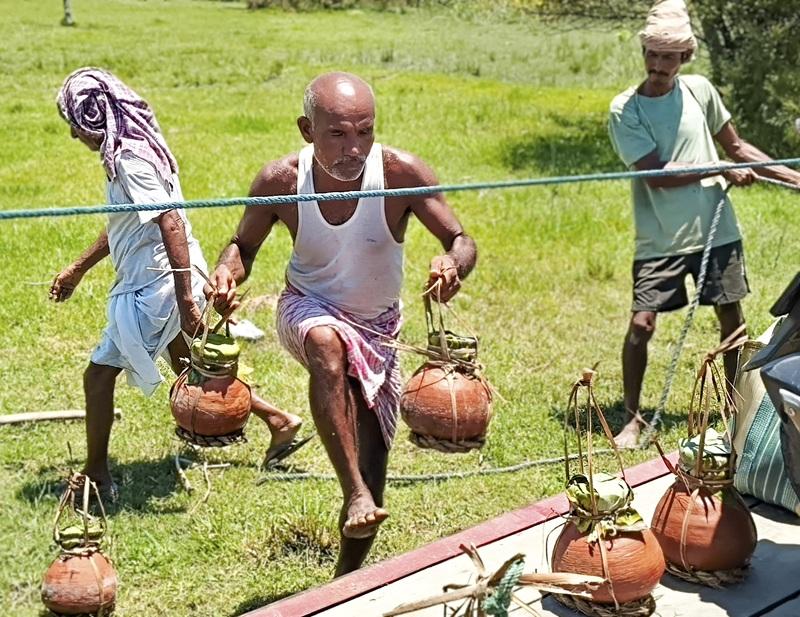
Photo: NEZINE
Milk and curd from sandbars of Majuli including that of Lakhi Chapori has high demand not just in the river island but also in Jorhat, Sivasagar and other districts because of its rich quality. The three milk traders had little extra milk to cater to the demand of ferry passengers but they politely expressed their inability to sell the curd pots as those were pre-ordered. Rai says that the order for the lot he has brought was placed one month in advance by the buyer from Charigaon in Jorhat district.
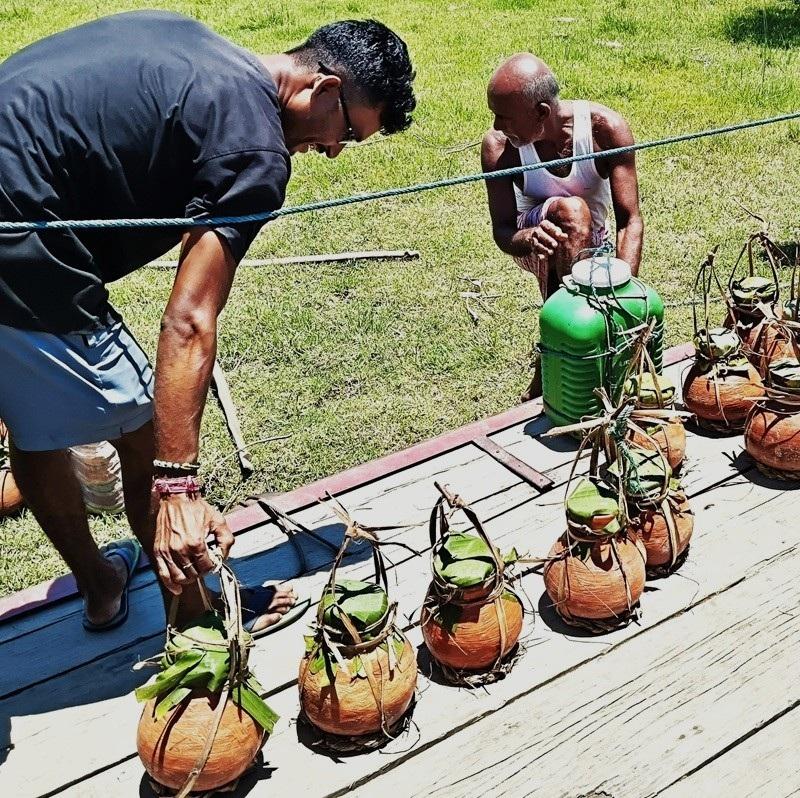
Photo: NEZINE
Explaining sandbar ecology, Jayanta Kr Sarma, an Independent Researcher of Cultural Ecology and Traditional Knowledge, says: “Sandbar deposits in rivers in the lower courses are a common feature. Usually, when a river flows from the highlands, erosional processes carry sediments. In the lower part, when the altitudinal variation reduces, the speed of the water in the river decreases and deposition of sediments begins. In most cases, larger particles of sand are deposited first; gradually, fine grains of sand start to deposit. Such depositional features, over a long period of time, convert many of these depositional areas into river islands. In such deposition areas, in particular portions, water remains at the surface for a long period of time and makes it comparatively moist; in such areas, vegetation starts to grow. Grass is one of the prominent types of vegetation that grows in such areas.”
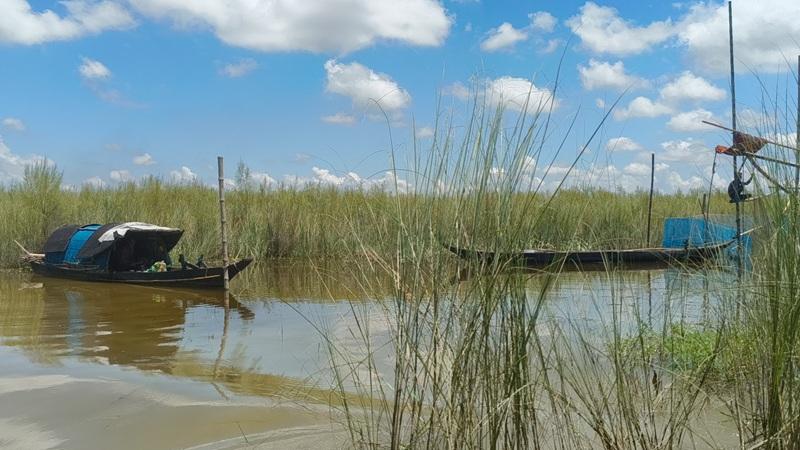
Photo: NEZINE
He further explains that the seeds of grass may be present within the deposited sediments, or they may come with water in the rainy season when inundation takes place in such areas due to the increase in the volume of water flowing in the river. There are many such river islands with grass cover in the river Brahmaputra in the valley part of Assam. “This river-island-based grassland develops a unique ecosystem, nurturing biodiversity of different varieties of grasses, insects, birds, butterflies, and herpetofauna; evidence of the presence of ungulates and wild cats has even been identified in some scientific studies. Moreover, this is also a refuge ground for wild buffalo and elephant. There is a possibility of identifying new species of rice or similar domesticable crop sources in such grassland.”
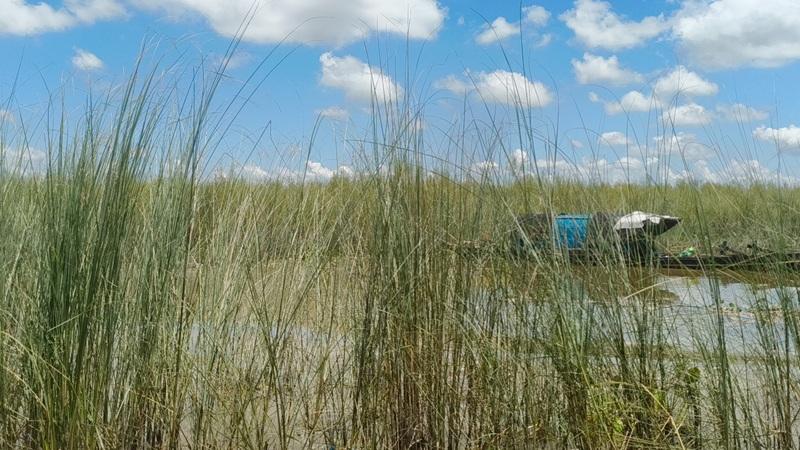
Photo: NEZINE
When asked about development of dairy farming on Majuli sandbars, Sarma says: “From historic times, cattle and buffalo grazing has taken place in such river islands where grasses are present. Grazing in such areas helps maintain the grass cover, delaying the vegetation succession process. However, domesticated cattle grazing, along with the presence of humans, has altered the ecosystem, increasing disturbances to the presence of wildlife in particular.
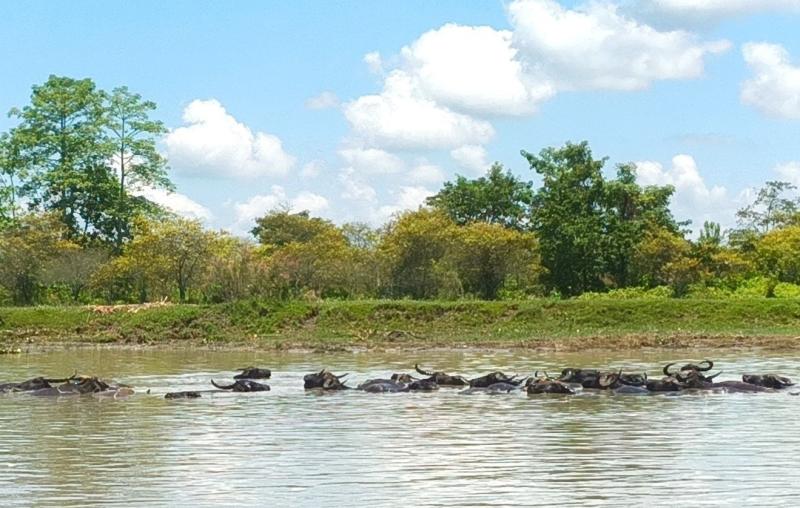
Photo: NEZINE
In the contemporary period, many invasive plants have also intruded into such areas through human intervention in larger riverine ecosystems. Gradually, anomalies take place in this pristine ecosystem; and over time, traditional grazing on such river islands is reducing.”
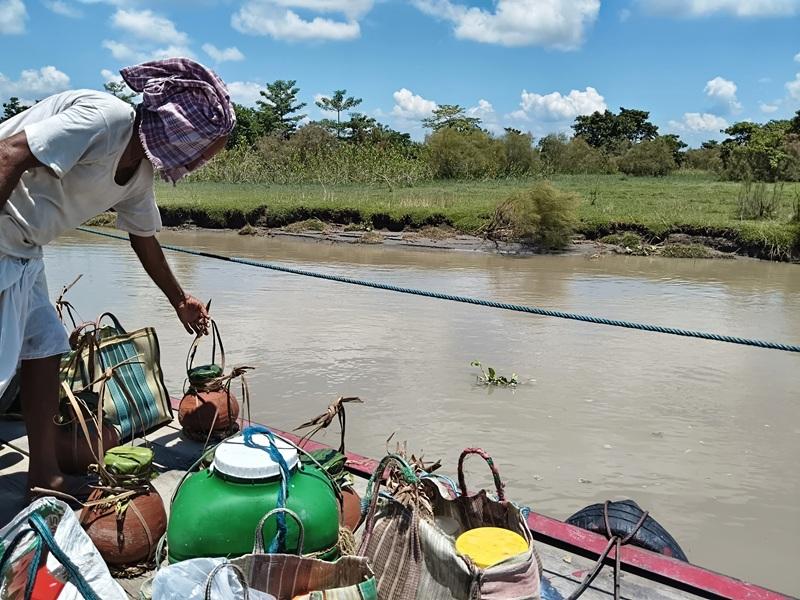
Photo: NEZINE
The economics of the trade is simple. Rai now buys curd at Rs 70 a kg and sells a 5 kg of curd for Rs 500. He will sell the smaller pot of 1 kg at Rs 120. He pays Rs 35 for each earthen pot with 5 kg capacity. He recollects when he had visited sandbar with father for the first time, one Mon ( a traditional Assamese unit of measurement which means about 40 kg or 40 litres) of milk used to be sold at Rs 60 by the cattle pen owners.
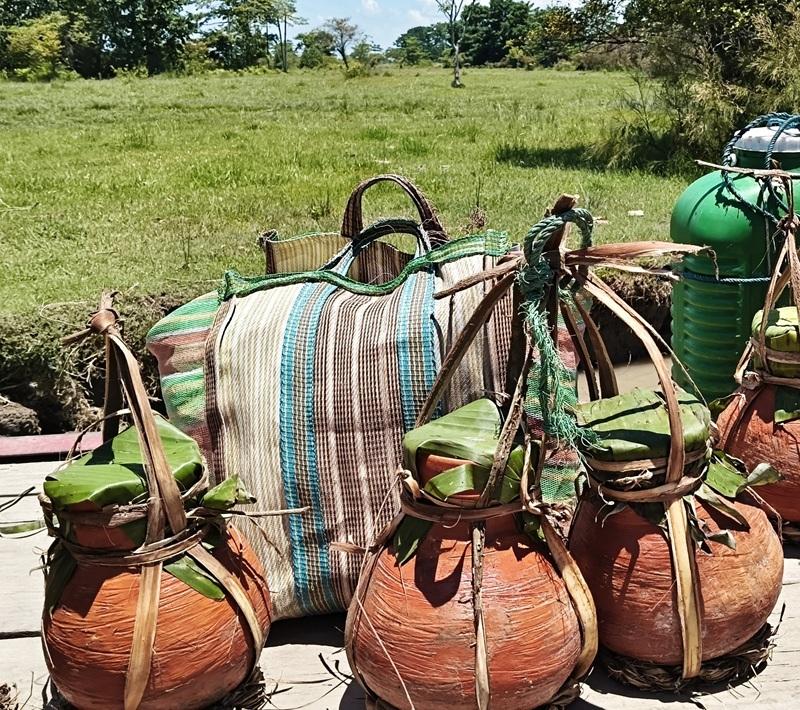
Photo: NEZINE
Ferry operation between Nimatighat and Kamalabari has become more uncertain nowadays, especially during winter due to increasing sediment deposit on the river route. On the days when ferry services remain suspended along the route, Avdesh Rai and other dairy traders are required to row their small country boats across the Brahmaputra to transport the curd pot and milk jars for delivering their orders.
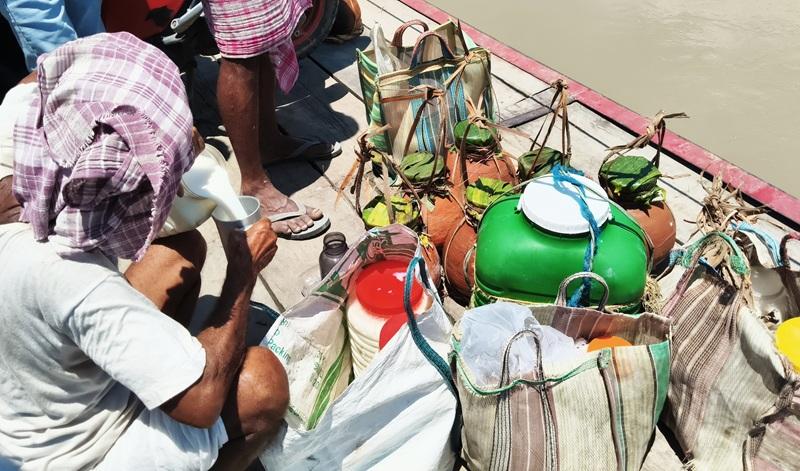
Photo: NEZINE
Rai visits his family once a year during the annual Chhath puja, a major religious festival in his home state. “My grandson is in the final semester of his graduation. I must keep doing this dairy business of collecting milk and curd every morning and delivering the orders to help his father support his education even though I find it now laborious because of my age, especially when I am required to row the boat.”
Apart from his son, Rai has two daughters, both of whom he has married off. His wife has already passed. The quiet burden of the compulsion to work to manage the household despite advancing age is clearly visible on his face.
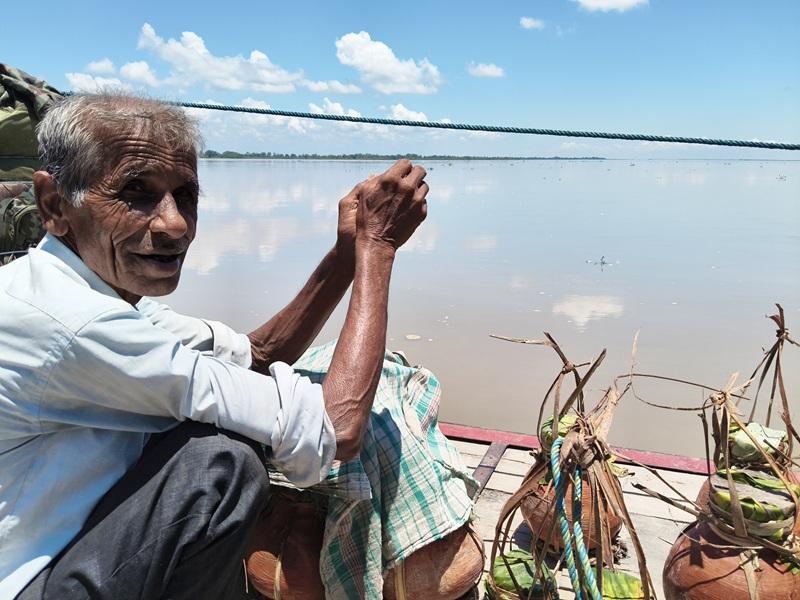
Photo: NEZINE
As the ferry anchors at Nimatighat around 11.30 am, Rai and the other two milk traders quickly unload the pots and proceeds under the scorching Sun to deliver their orders without wasting much time as they plan to return to their camps on Lakhi Chapori the same day.
 Navigations
  Quick Contact
 Subscribe Us
 Quick Mail