> Development > Ecology and forest


In the quiet forest fringe village of Landangpara, nestled near Manas National Park, a silent revolution is taking root. It is led by a group of women who dared to dream differently. In 2014, as most households in the village continued to depend heavily on forest resources for daily needs, a small group of women came together to form Purnima Self-Help Group (SHG), planting the seeds of change with looms and leaves.
Their journey took an extraordinary turn when they found unexpected potential in a aggresive invader weed species, Chromolaena odorata, also known as Jarmon in the Bodo language. This fast-spreading invasive weed species had been suffocating native grasses in the Manas landscape, threatening both biodiversity and grazing land.
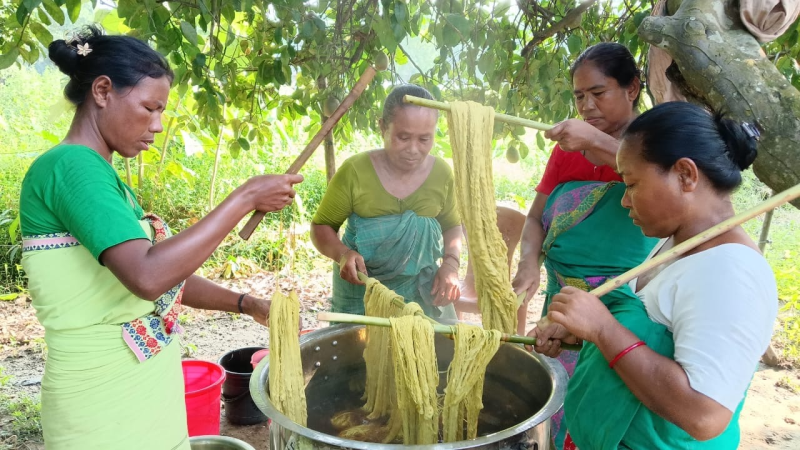
Photo by Swapan Kr Das
The traditional skill of Bodo women in using natural colour for dyeing and biodiversity conservation organisation Aaranyak’s research-based findings on extraction of natural colour from the invasive species converged into a unique initiative by Purnima SHG. Aaranyak guided them in natural dyeing using plants, bark, roots, and leaves gathered from their own landscape, including Jarmon.
Renu Narzary, a member of the SHG says, “While most saw it as a problem, our Purnima SHG saw the possibility to turn this invasive weed into a useful thing after undergoing training imparted by Aaranyak.”
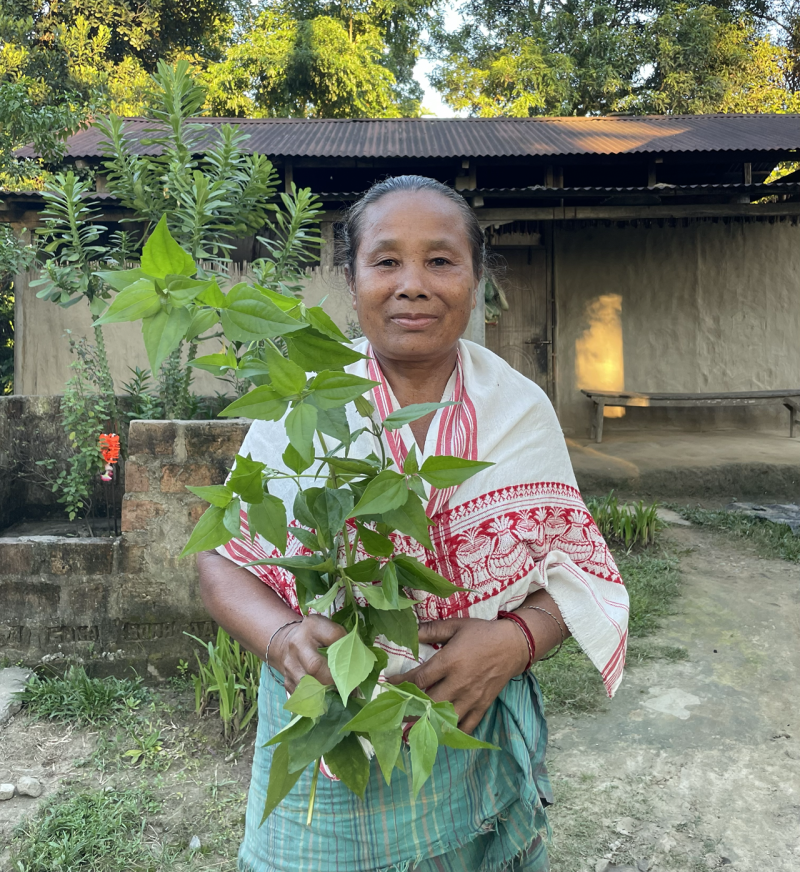
Renu Narzary holding a Jarmon ( Chromolaena odorata) plant Photo by Preety Boro
They began extracting natural green colour from Chromolaena odorata, transforming the invasive plant into a natural dye for their fabrics. What once symbolised ecological destruction now make their cloth shine with vibrant hues of defiance and innovation.
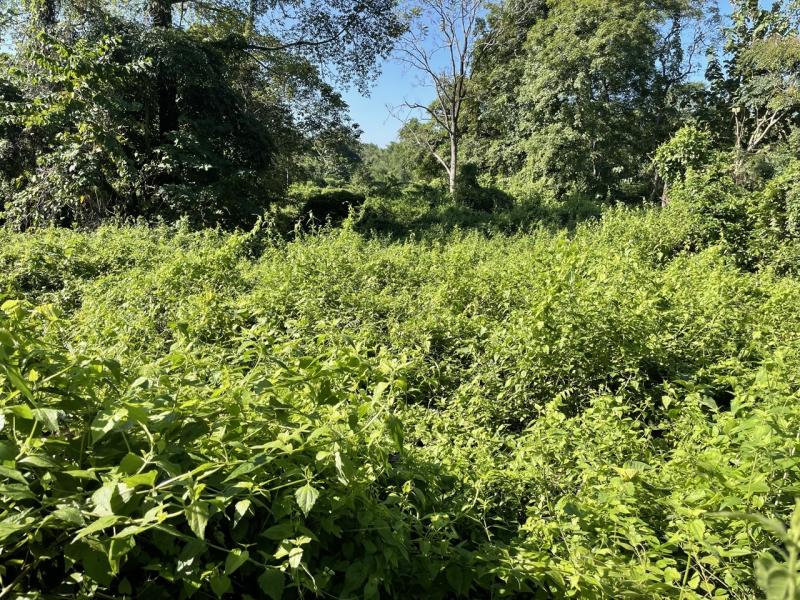
Photo by Preety Boro
A study titled “In Search of Aliens: Factors Influencing the Distribution of Chromolaena odorata and Mikania micrantha in the Terai Grasslands of Manas National Park, India” by Dr. Anukul Nath, Dr. Alolika Sinha, Dr. Bibhuti P. Lahkar, and Dr. Namita Brahma examined the spread of these two invasive plant species in the Manas grasslands.
The research found that Chromolaena odorata and Mikania micrantha have invaded around 74.87 sq. km and 81.82 sq. km respectively, with a significant overlap in their distribution in grasslands of Manas National Park. The study also identified proximity to roads and human settlements, elevation, fire occurrence, and dry-season rainfall as key factors driving their spread.
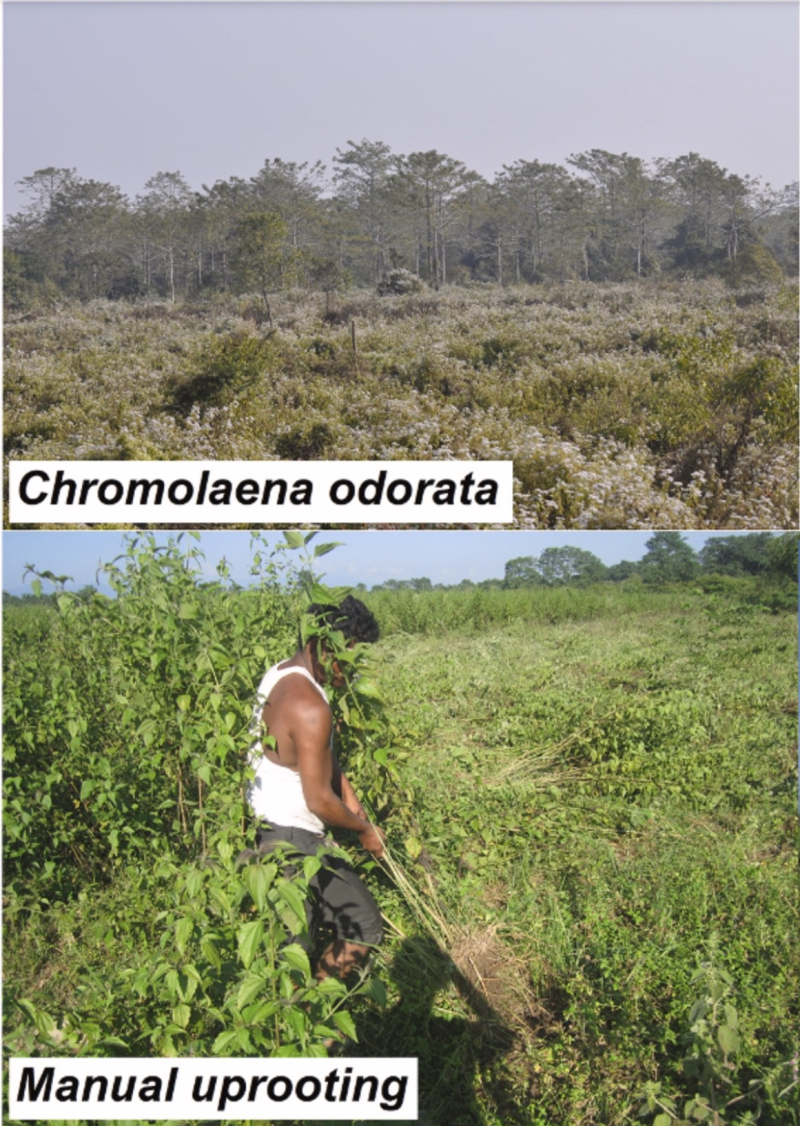
Photo courtesy - Aaranyak
Dr. Alolika Sinha, a conservation biologist, says: “We found that the grasslands were invaded primarily by two alien plant species - Chromolaena odorata and Mikania micrantha. Around 30 percent of the grasslands showed varying levels of invasion, which in turn affected grassland-dependent species by reducing their habitat and forage availability,” she explains.
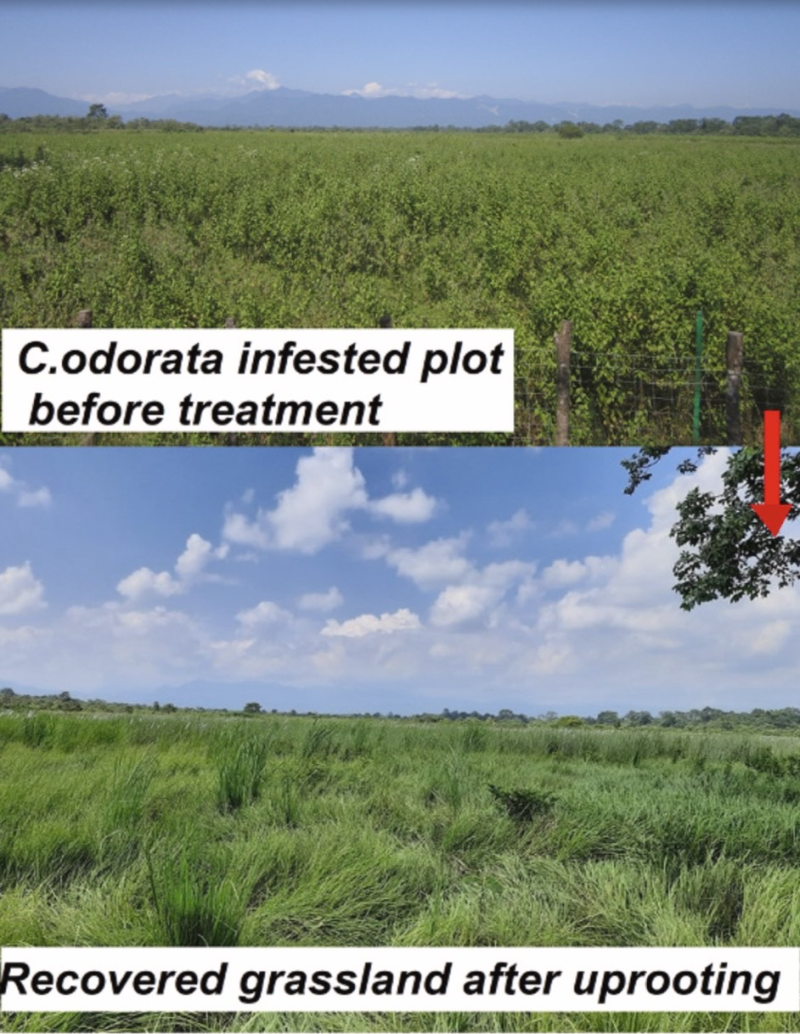
Photo courtesy - Aaranyak
Their work was not just creative; it was restorative. Each thread they dyed and wove became a story of resilience, knowledge, and conservation.
Today, the women of Purnima SHG weave traditional Bodo gamusas and handcrafted fabrics for bags, dyed with natural ingredients that produce beautiful, eco-friendly colours. One of the dyes is made from this very invasive plant that threatens their ecosystem, is now giving a natural green shade.
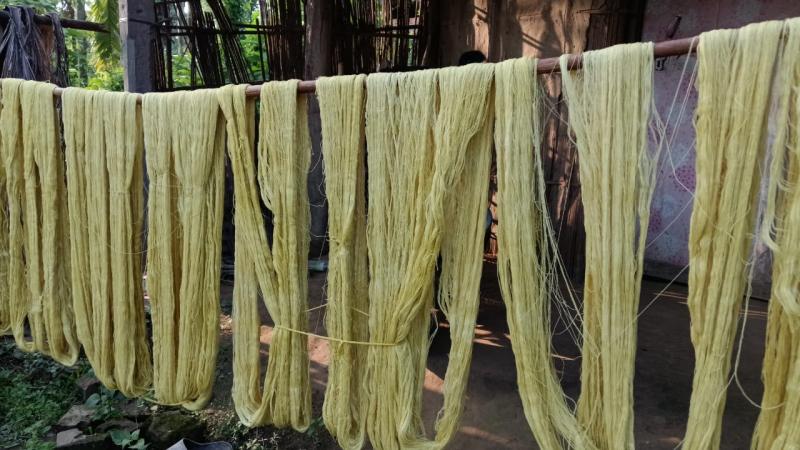
Photo by Swapan Kr Das
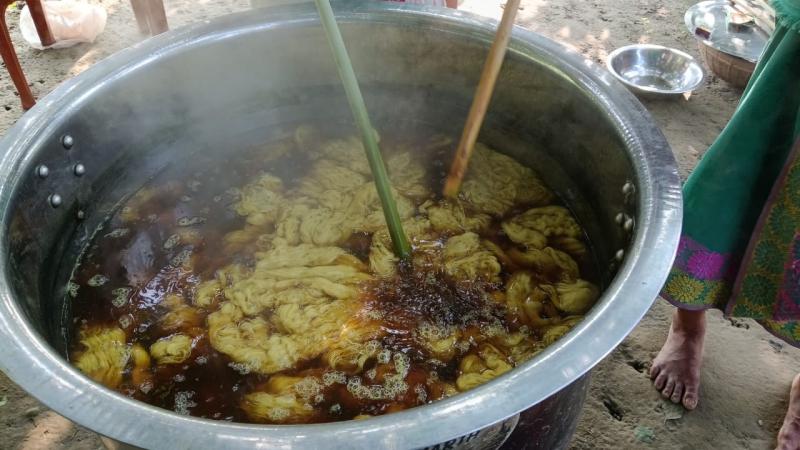
Photo by Swapan Kr Das
Renu Narzary explains, “We also create dyes from onion peels, which give a light brown to pinkish tone; teak leaves, which produce a deep maroon or reddish-brown colour; hibiscus flowers, which yield a soft pink to purplish hue; and tea leaves, which give a warm golden-brown shade.” She says that the craft of natural dyeing also carries the imprint of memory of learning the traditional skill from their mothers and grandmothers.
Two pieces of gamusas sell for Rs. 580, providing the women with not only a steady income but also a meaningful way to promote environmental awareness through their craft.
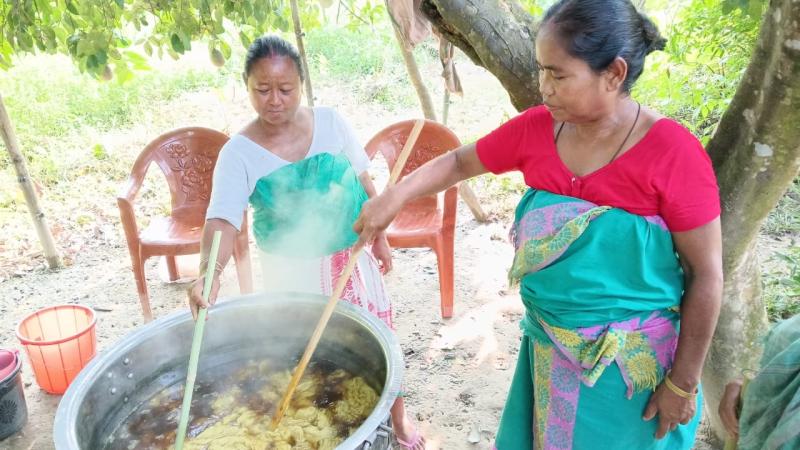
Photo by Swapan Kr Das
“We also give training to people who are interested in learning natural dyeing,” Renu said. Through their work, the women of Purnima SHG have reduced dependence on forest extraction, built financial independence, and sparked a powerful story where tradition meets ecological action.
Photo by Preety Boro
Their dye pots now carry the knowledge of generations and the hope of a sustainable future. Purnima SHG’s story is not just about weaving cloth. It’s about weaving together culture, ecology, and empowerment. It is a story of how even an invasive weed can be turned into a tool for change when traditional knowledge and practice of indigenous communities is supported with research-based biodiversity conservation.
 Navigations
  Quick Contact
 Subscribe Us
 Quick Mail