> Development > Sustainable cities


As midnight quietly wraps itself around the city of Guwahati, a different kind of life awakens. The once-busy streets that had bustled with cars, shoppers, and honking horns during the day now host a quieter, humbler rhythm. Delivery agents dart through the semi-lit roads, completing their final tasks of the day. Security guards stand motionless, their bodies weary but minds alert, stationed outside towering apartment buildings, silently watching over residents they barely know. The air is thick with fatigue, yet the city breathes, thanks to these invisible hands that keep it alive.
Beneath this calm exterior lies a truth often left untold: the sacrifices, struggles, and silent resilience of those who fuel the city’s growth, often without recognition. Among them was 23-year-old Ringthar Phonglosa, a young man whose journey reflects the untold realities of thousands like him. From May to November 2024, Ringthar worked tirelessly as a security guard outside a bustling apartment complex in Guwahati. His shifts spanned 12 long hours a day, seven days a week, without a single holiday. No weekends off, no festive breaks, just an unending routine shaped by duty and survival.
Originally from West Gojalipar in Howraghat, located in the hilly district of Karbi Anglong, Ringthar left his home in search of a better life. Farming had sustained his family for generations, but times were changing. Unpredictable weather patterns, shrinking yields, and soaring costs had made agriculture nearly unsustainable. Like many youths from rural Assam, Ringthar saw migration as the only viable path forward. Guwahati, with its rising buildings and busy roads, seemed to offer opportunity if not a dream, then at least a way to escape hardship. But the city was far less kind than he had imagined.
Though his employer provided free meals and a small room to sleep in, Ringthar’s life in Guwahati was marked by routine, repetition, and deep solitude. The job, while technically stable, came with its own costs. Hours of standing without rest, constant vigilance, the pressure to remain alert even in the dead of night, it all took a toll on his body and mind. Conversations were few, companionship rarer. And despite working so hard, his financial gains were meager. After sending Rs. 5,000 to Rs. 7,000 back home every month to support his family, Ringthar was left with barely Rs. 3,000 to meet his personal needs. With this amount, saving was impossible.
Entertainment, hobbies, or even a decent meal outside his dormitory were out of reach. He survived, but just barely. Yet, quitting was never on the table. Back in his village, his family depended on him. His father’s health was declining, his younger siblings were still in school, and his mother needed money to manage daily expenses. The weight of expectations, responsibility, and guilt kept him going. He believed, like many others, that enduring this hardship would eventually lead to something better, that if he could just hold on, the sacrifices would be worth it. Ringthar’s experience is not unique. His story mirrors that of thousands of rural migrants who keep Guwahati functioning from behind the scenes. They work in construction sites, apartments, offices, restaurants, and homes. They sweep the streets, clean the sewers, cook meals, deliver packages, and guard buildings. Their presence is everywhere, yet their identities remain largely invisible in the city’s glossy image of development.
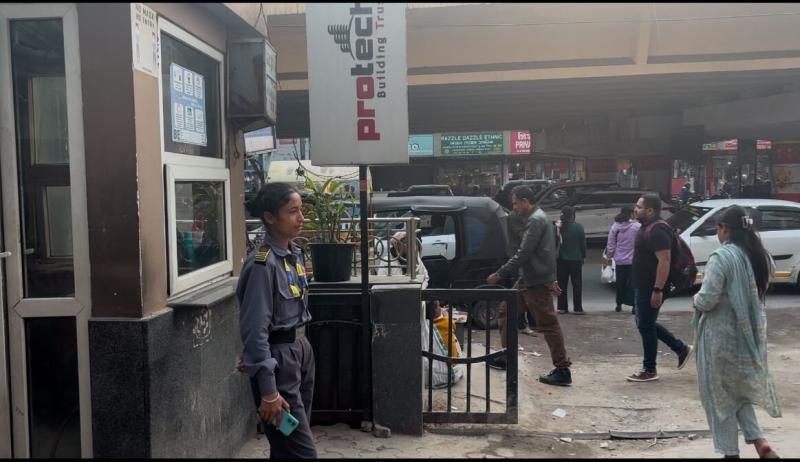
Photo- Parismita Bathari
Migration has always been an integral part of human history. From ancient times to modern days, people have moved across geographies in search of stability, safety, and survival. In India, and especially in urban centers like Guwahati, this migration has grown rapidly. Between 1991 and 2001, the city witnessed a 36.78% increase in its migrant population from 276,835 to 378,657. While recent census figures remain unavailable, the upward trend continues, driven by the rising demand for cheap, unregulated labor. According to the Guwahati Metropolitan Development Authority, nearly 70% of construction workers in the city today are rural migrants, many of whom lack proper identification, contracts, or access to welfare schemes.
Their living conditions are far from humane. While Ringthar was fortunate to have accommodation provided by his employer, many others live in congested rental spaces, tiny, poorly ventilated rooms shared with strangers, often without running water or electricity. Hygiene is compromised, and personal safety is a constant concern. Female migrants, in particular, face additional layers of vulnerability: low wages, gender-based violence, lack of security, and discrimination at workplaces. For students migrating from rural areas for education, survival becomes a juggling act between academics and poorly paid part-time jobs. Long hours of work leave them too tired to study, affecting both their health and academic performance.
Most migrant workers, like Ringthar, have completed primary education. Government initiatives in rural areas have improved literacy rates, but the journey ends early for many. Financial stress forces teenagers to drop out and join the workforce prematurely, robbing them of a chance to build a future through education. Despite being indispensable to the functioning of the city, these workers receive little in return no job security, no fair wages, no access to affordable healthcare or housing. Their sweat powers urban growth, but their lives remain neglected and unacknowledged.
Eventually, the weight of the city began to wear down even Ringthar’s determination. After months of tireless work, little had changed. He was still poor, still exhausted, and still invisible. The dream that once brought him to Guwahati began to dim. And so, with courage and clarity, Ringthar made a decision that many migrants fear: he returned home. Back in West Gojalipar, he revisited the land that once seemed hopeless. With a fresh perspective and modest savings, Ringthar started farming again. This time, he adopted newer techniques, better planning, and seasonal crop management. To his surprise, he now earns Rs. 20,000 a month roughly the same as in Guwahati, but under far healthier and dignified conditions. His living expenses are lower, and he now saves Rs. 15,000 monthly. The same soil that once pushed him away now sustains him. In the silence of the fields, amidst the chirping of birds and the rustling of leaves, Ringthar has found something the city never offered: peace.
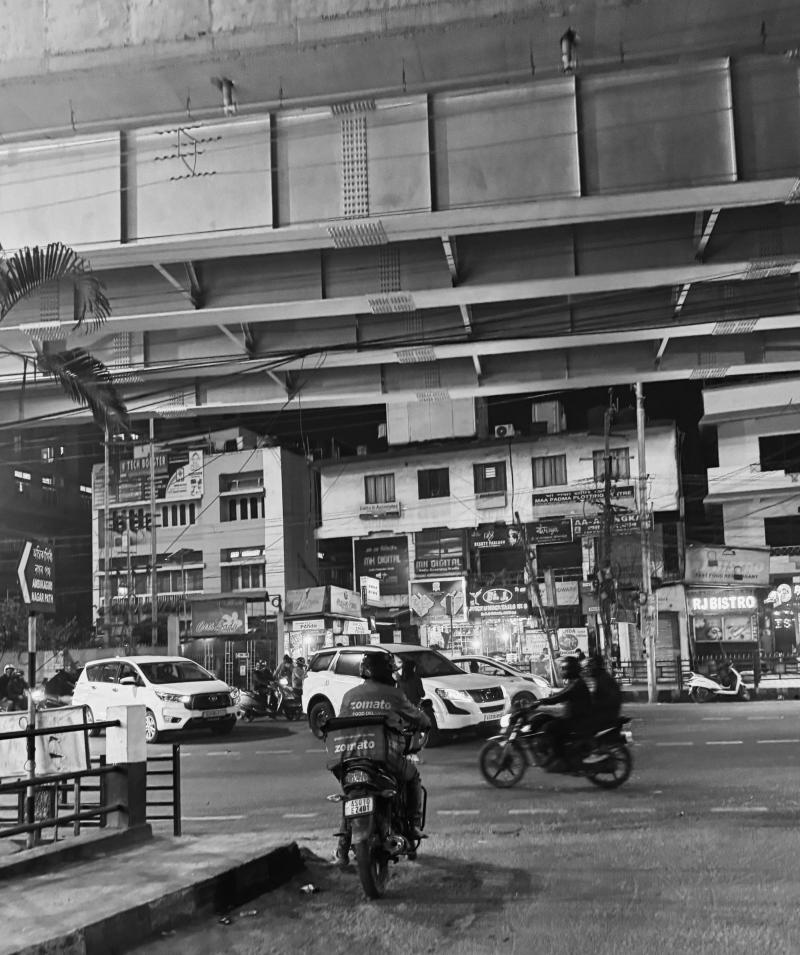
Photo - Subhadra Sharma
His story is a profound reminder that survival is not just about earning a wage, it’s about living with dignity, purpose, and balance. Progress must never be measured solely in skyscrapers, or GDP figures. True progress includes honoring those who build it with their hands, their time, and their lives.
As Guwahati continues to grow, it must look beyond its skyline and reflect on those who remain at its base - the migrant workers, the backbone of its development. Policies need to become more inclusive, fair wages must be ensured, and living conditions must be dignified. Their sacrifices are too great to remain unseen. Now, back in his village, Ringthar starts his mornings with the sun on his face and the sound of birds instead of traffic. The soil that once failed him now responds to his touch, steady and generous. His days are filled with purpose, not pressure. What the city failed to provide, the stillness of the village gave him: a sense of peace. Sometimes, as he walks home with the scent of crops in the air and dust on his boots, he smiles to himself. Guwahati gave him a job, but the village gave him a life.
 Navigations
  Quick Contact
 Subscribe Us
 Quick Mail